We specialize in designing refined homes that embrace the rich cultural heritage of both western and eastern global societies.
We stand out from other firms by our long and successful history of actually developing and building many of these homes at our own cost, and with our own team.
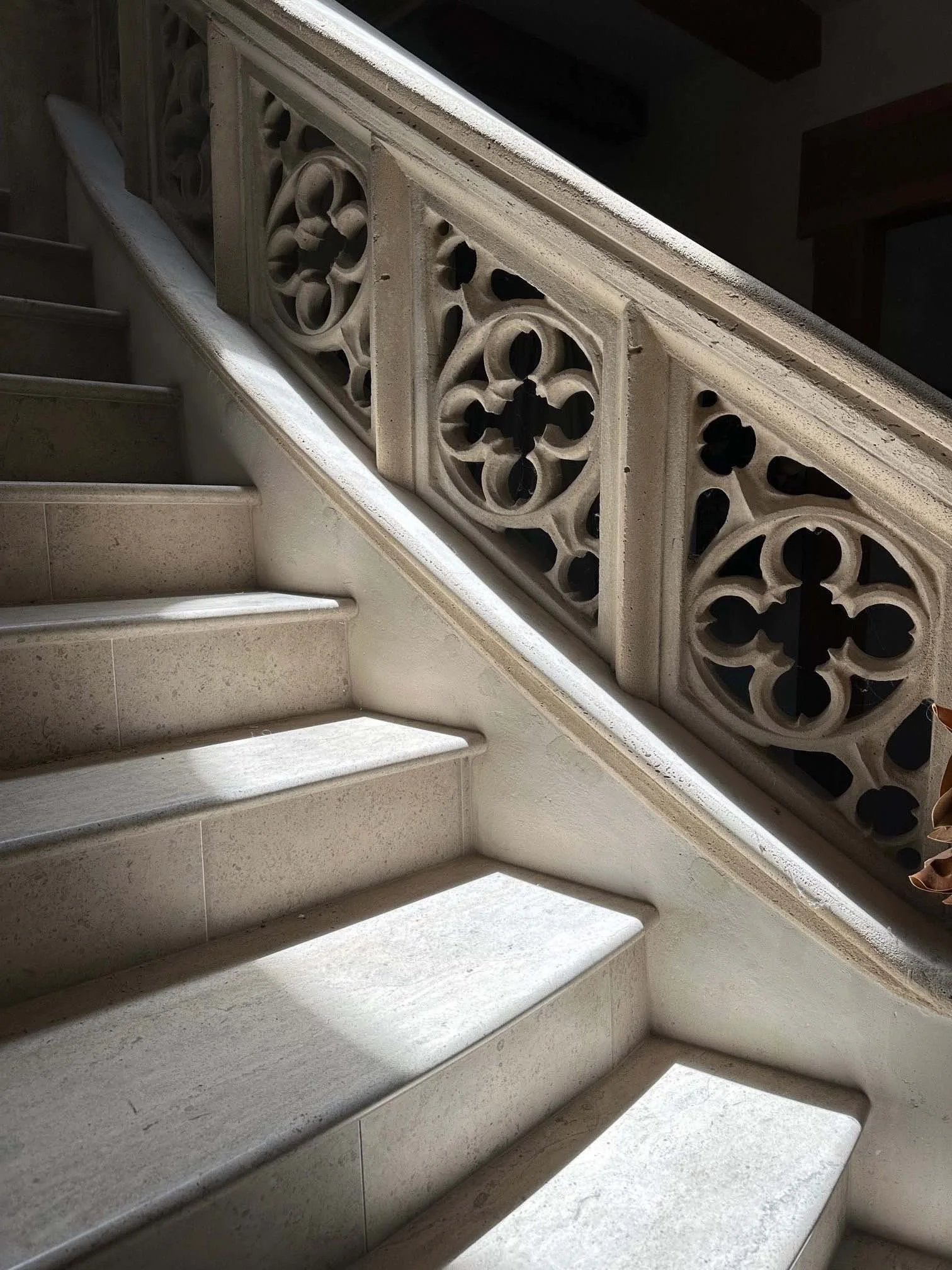
New home stair detail
This experience provides us the knowledge and drive to optimize a home’s “cost-to-benefit” for our clients.
Contact:
Mark/Studio Architecture
markstudioarchitecture.com
Primary Phone: 415-713-9480
Bay Area Office:
106 Vicente Road, Berkeley, CA. 94705
Lake Tahoe Office:
11310 Thelin Drive, Truckee, CA. 94705
Email: capomaestro2@gmail.com
Portfolio of Architectural Designs:
From our archive of 51 architectural projects we have selected five recently Completed homes as case studies:
Case Study Four:
Yale House remodel
Case Study One: New Hillside home in Berkeley
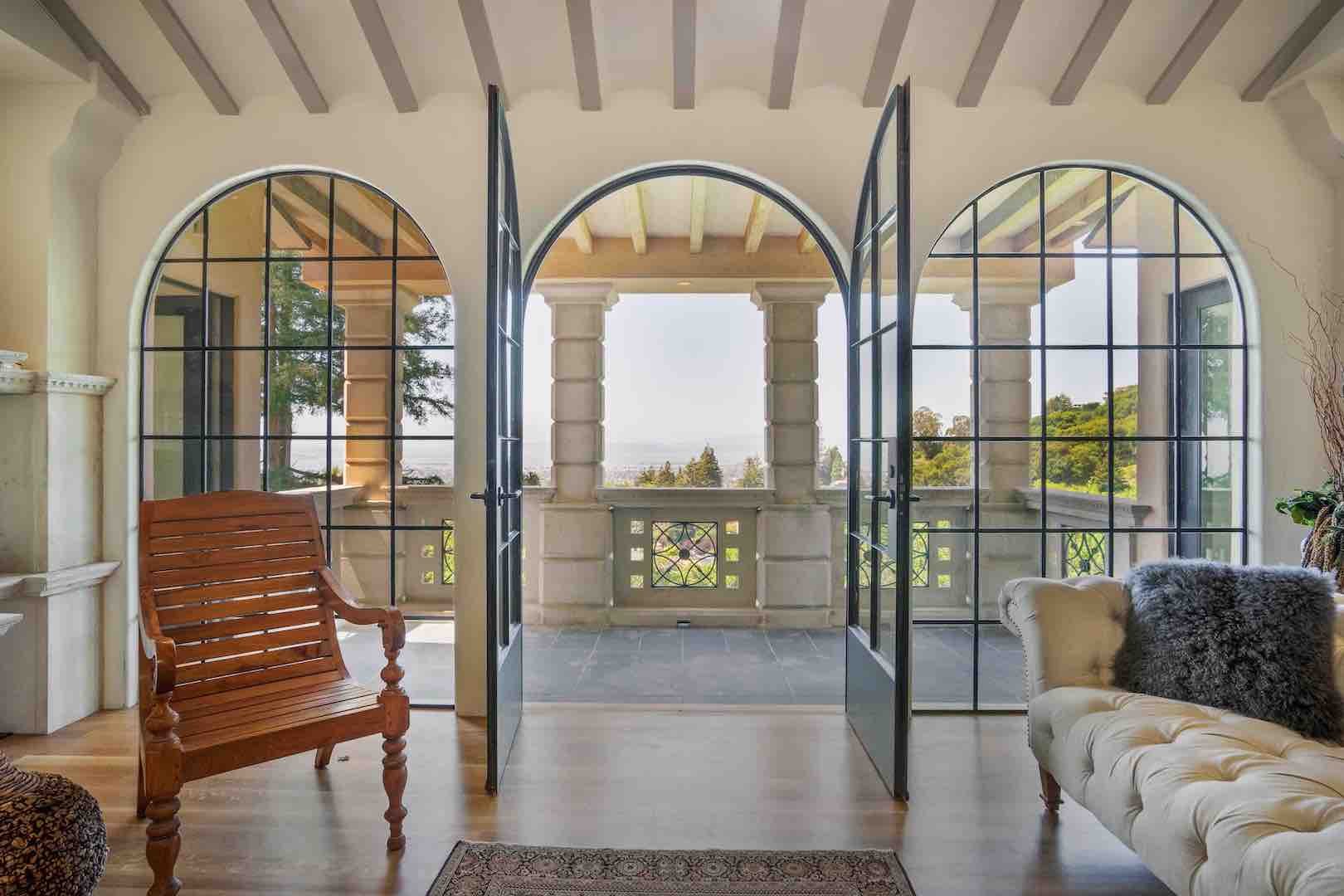
Terrace
This project presented a challenge common to down-slope hillside homes: how to situate the mass of the building such that it presented the street with a substantial two-level facade, while avoiding planning code restriction
Related to that was the problem of placing the building Entry to avoid an onerous stair, either just outside the Entry, or in the Foyer. .
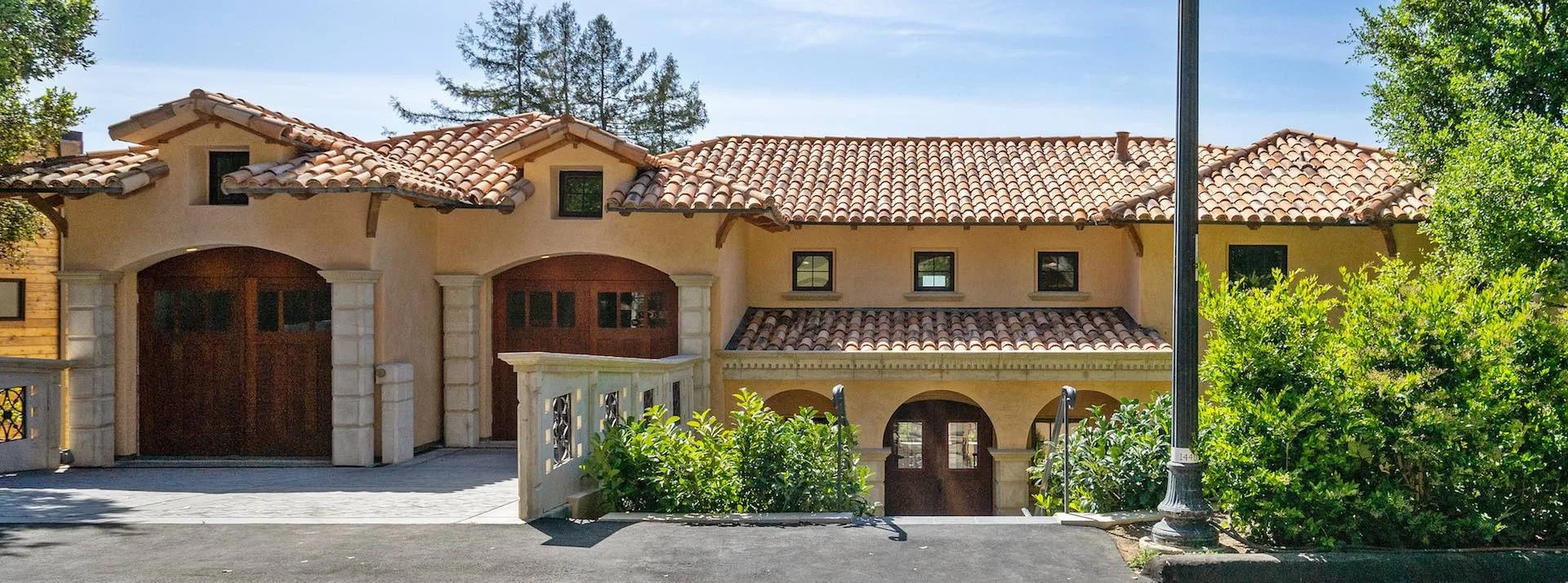
Front View of Home
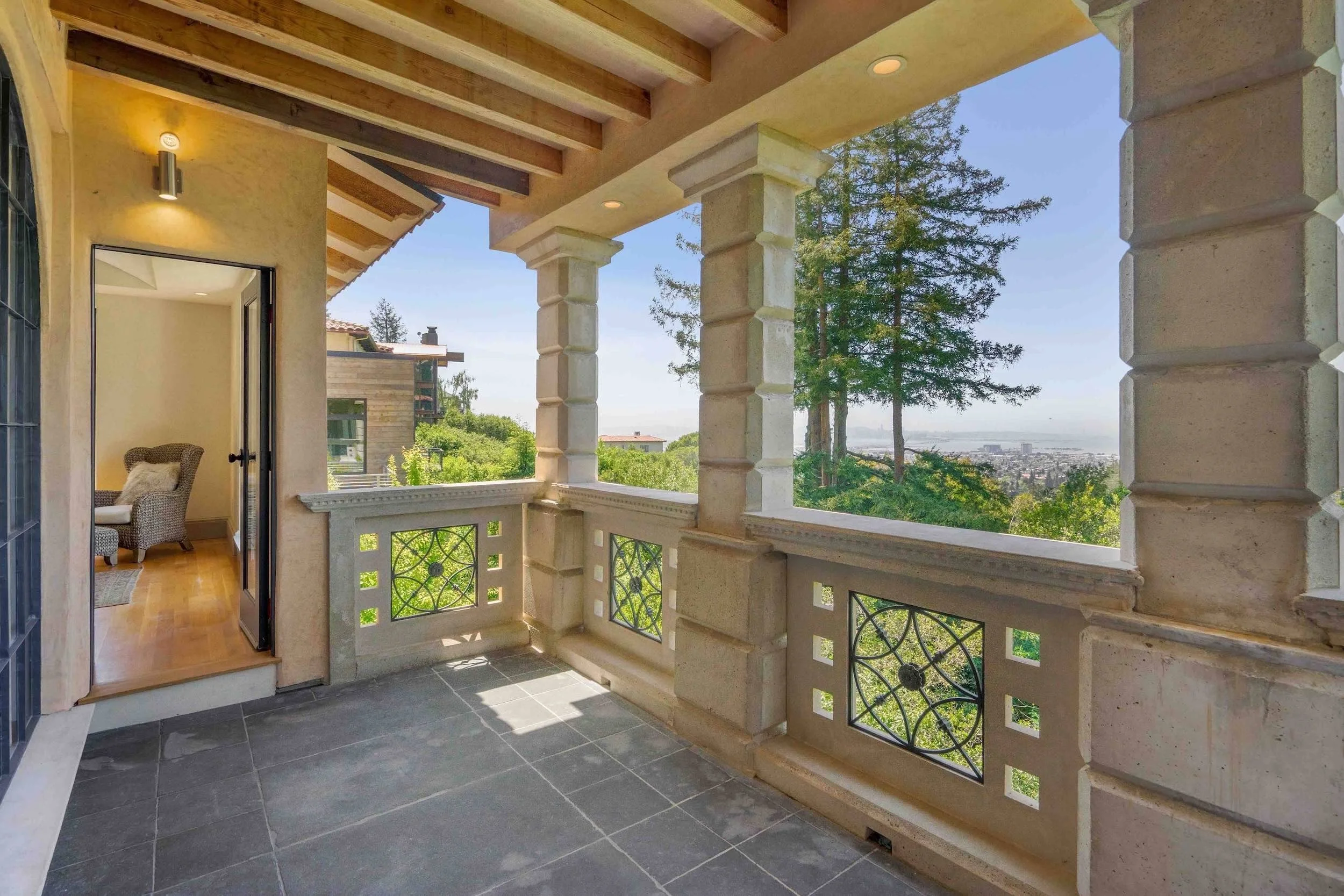
View Terrace
A perfect balance between these competing goals was found by creating an elevated front yard supported by a high concrete retaining wall below the front wall of the home.
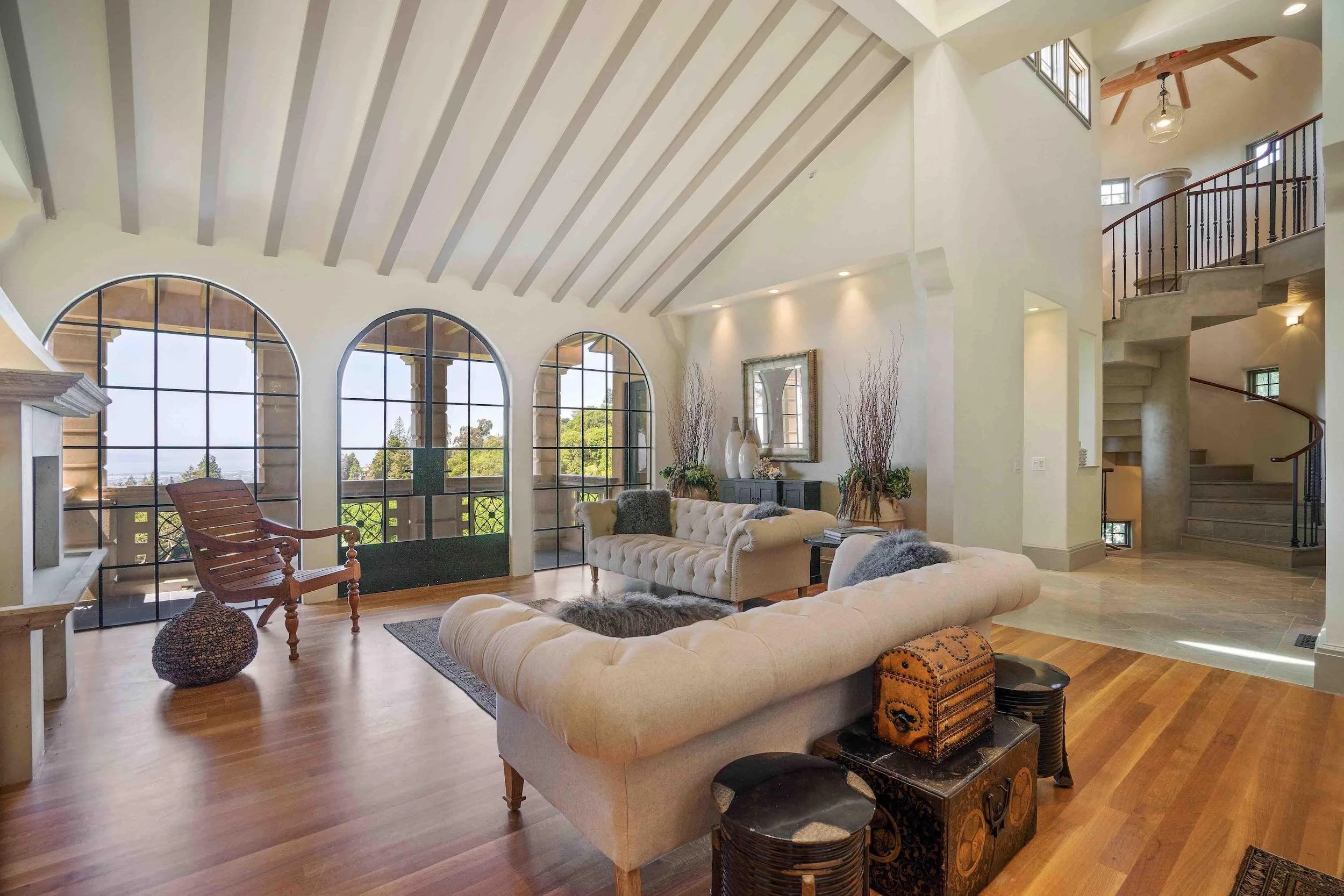
Living Room & Atrium
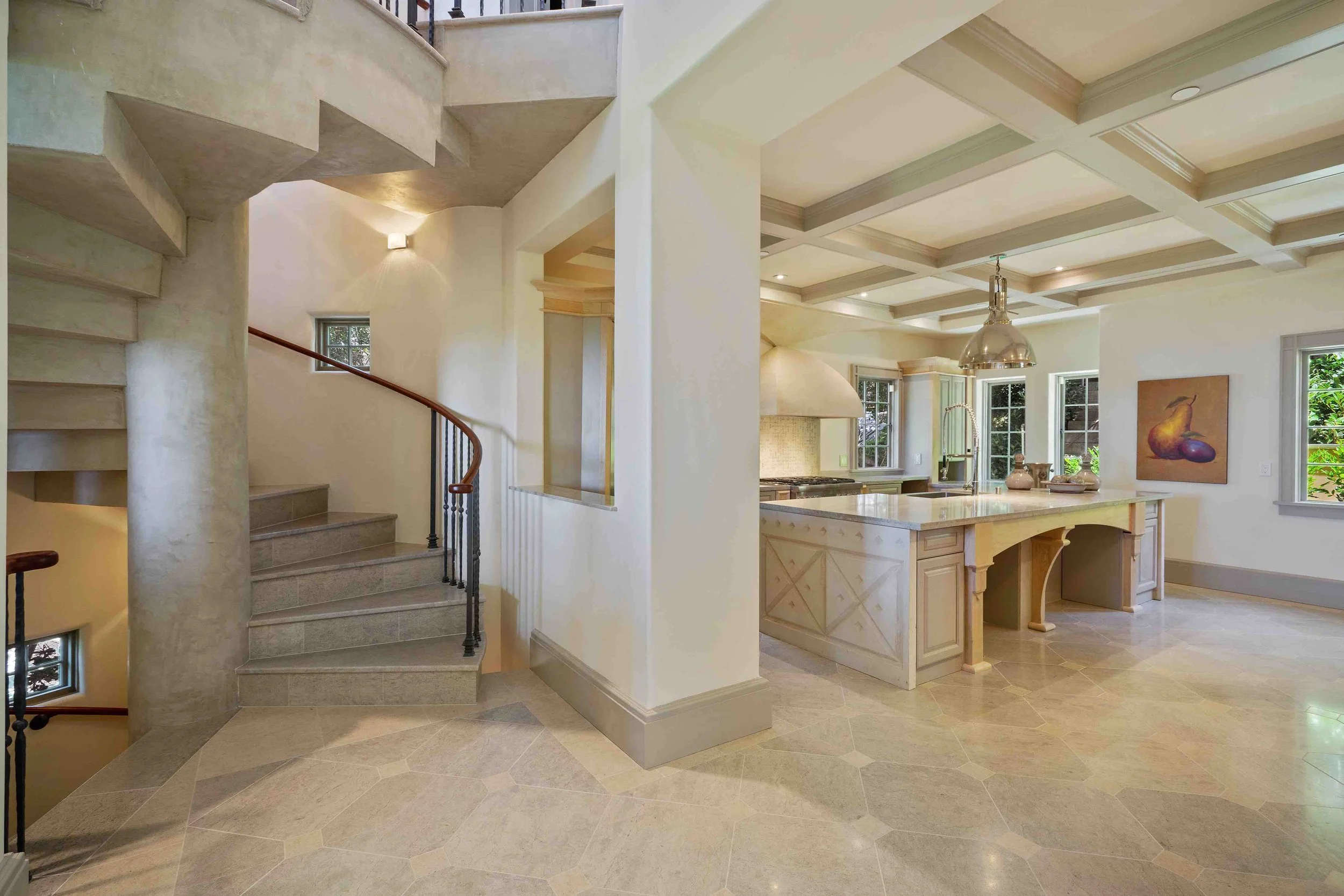
Atrium & Kitchen
This new home design envisioned a very large Tuscan Style Villa that embraced spectacular San Francisco Bay Views and accommodated a multi-generational family with both private and communal spaces, all sharing those views. All of that was to be placed on a steep down sloping site, while maintaining a two -story street presence.
the resulting floor plan placed the grandmother Suite in a Mezzanine-Level space overlooking the Main Level and still capturing the Bay views. The broad and deep Main Level provided the Living, Dining and Kitchen spaces and an Atrium with a three-level spiral stair, as well as the Master Suite, thus making one-level living possible for the owners later in life. Just beyond the Living Room, a large Terrace provides an outdoor living space for taking in fresh air and the expansive vistas. Below the Main Level is the Bedroom level with a complete second master suite and several other bedrooms for children, guests and offices.
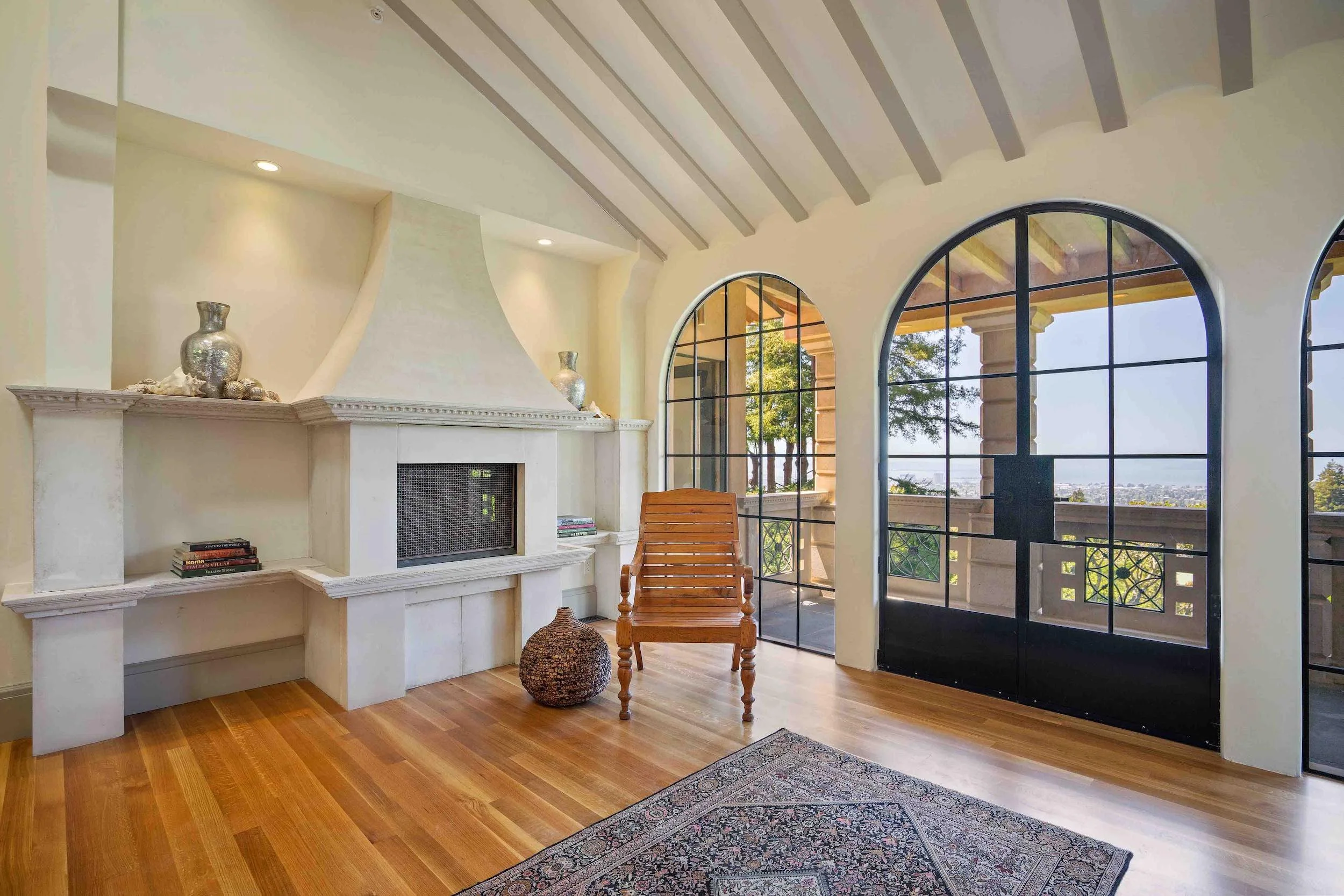
Fireplace
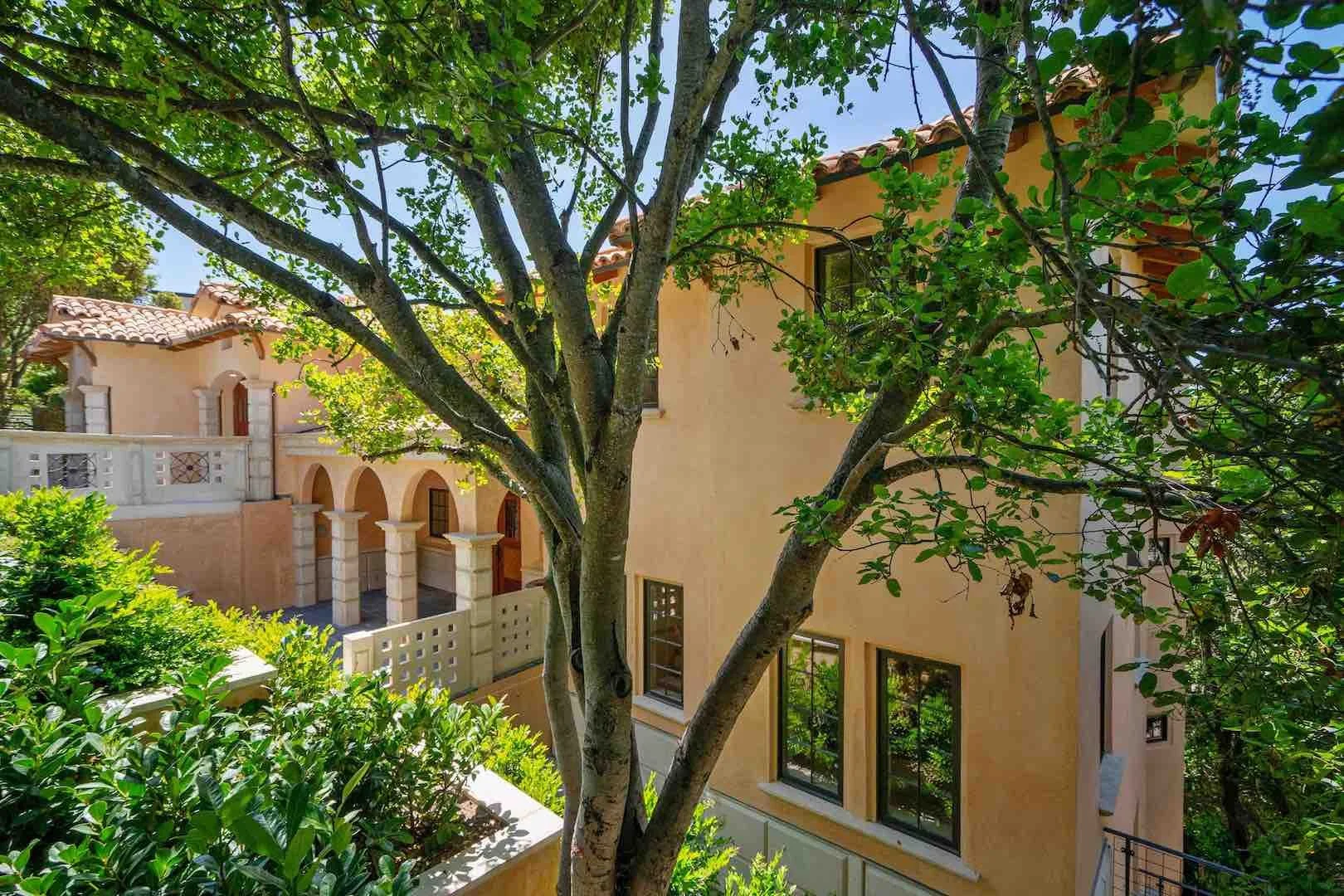
Six years later, the owners needed to relocate and reluctantly sold the home for approximately twice their total investment in the property
Northeast view of home
Additional Photos of Hillside Home

Master Bedroom
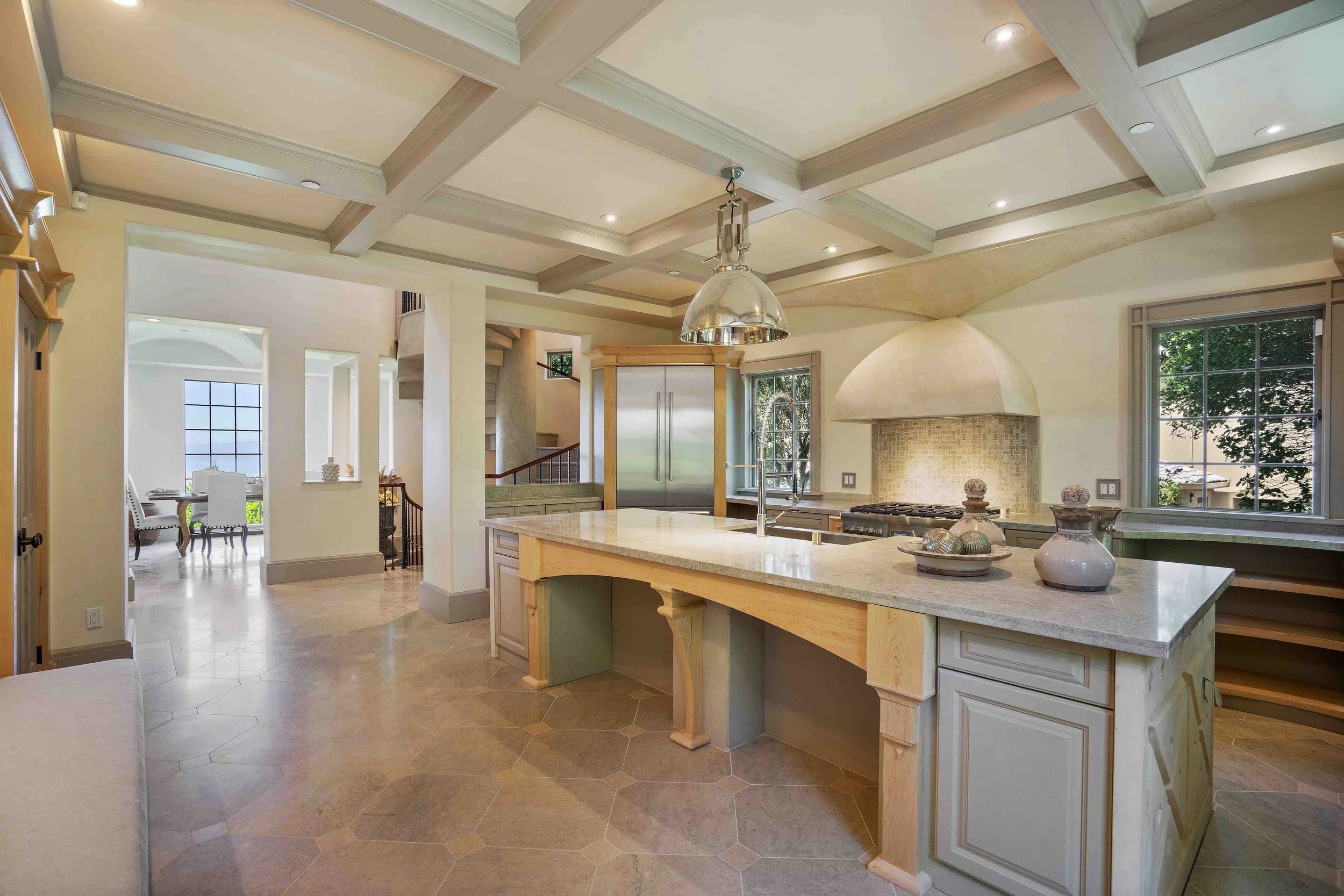
Kitchen
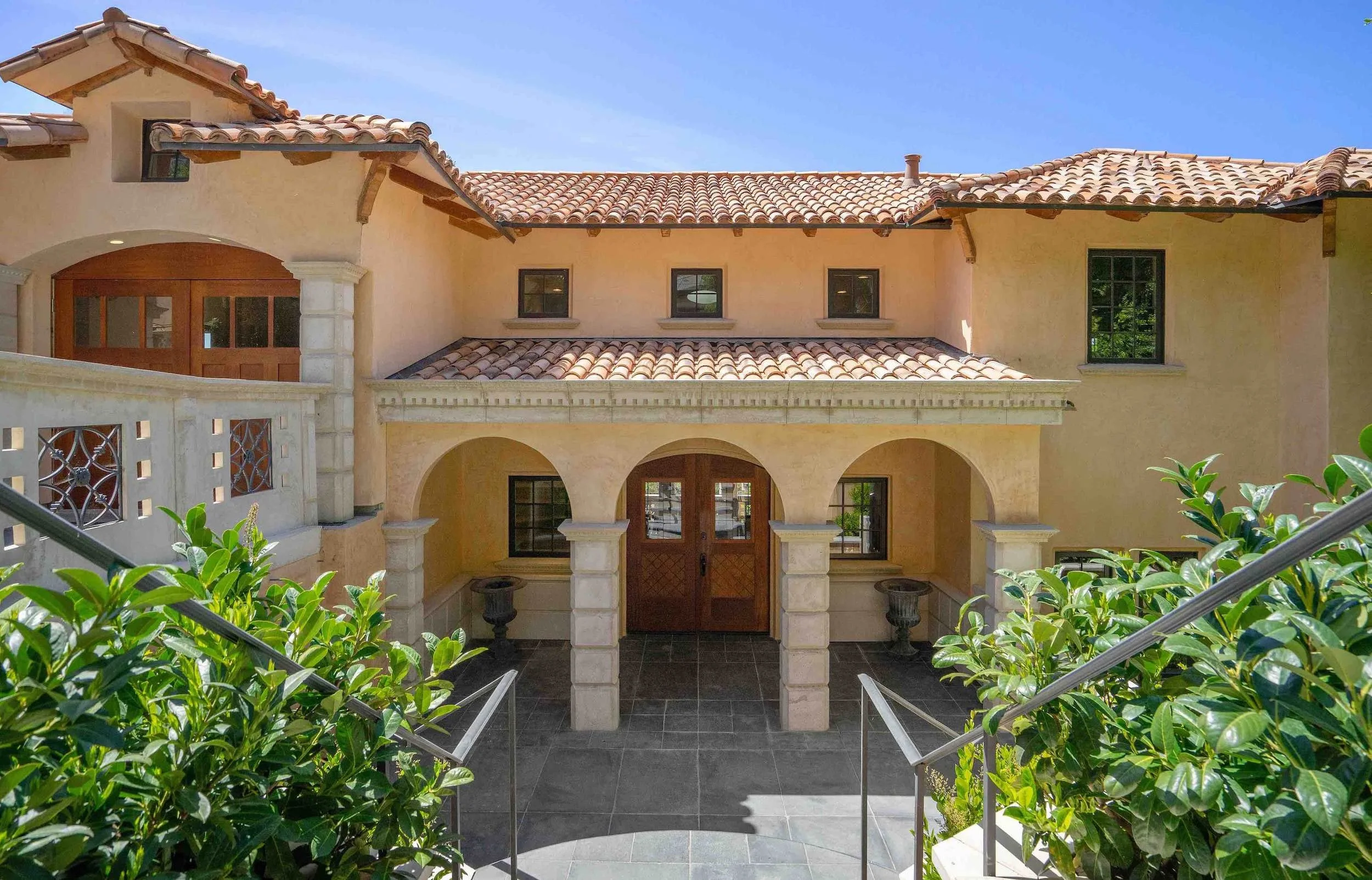
Portico
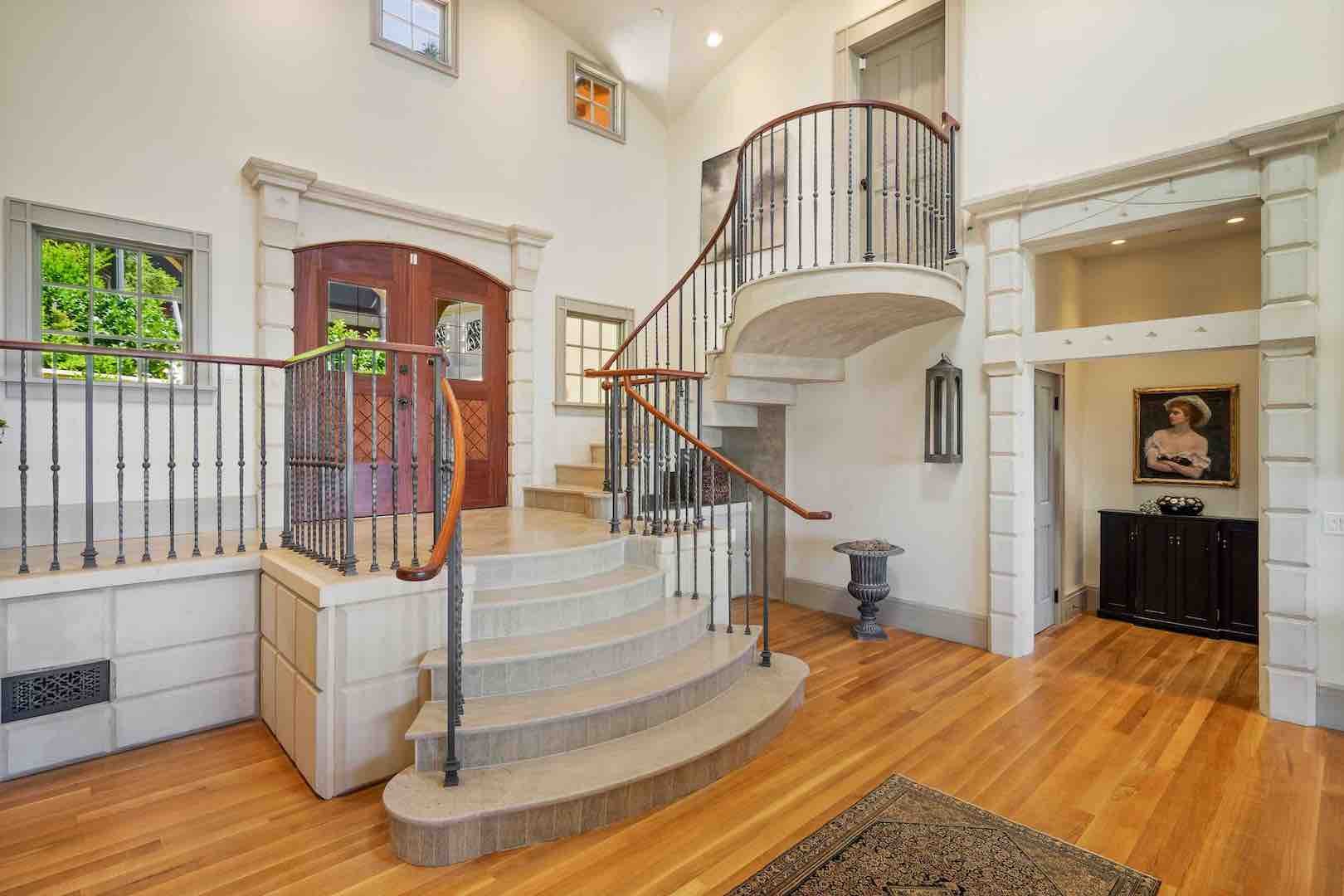
Foyer
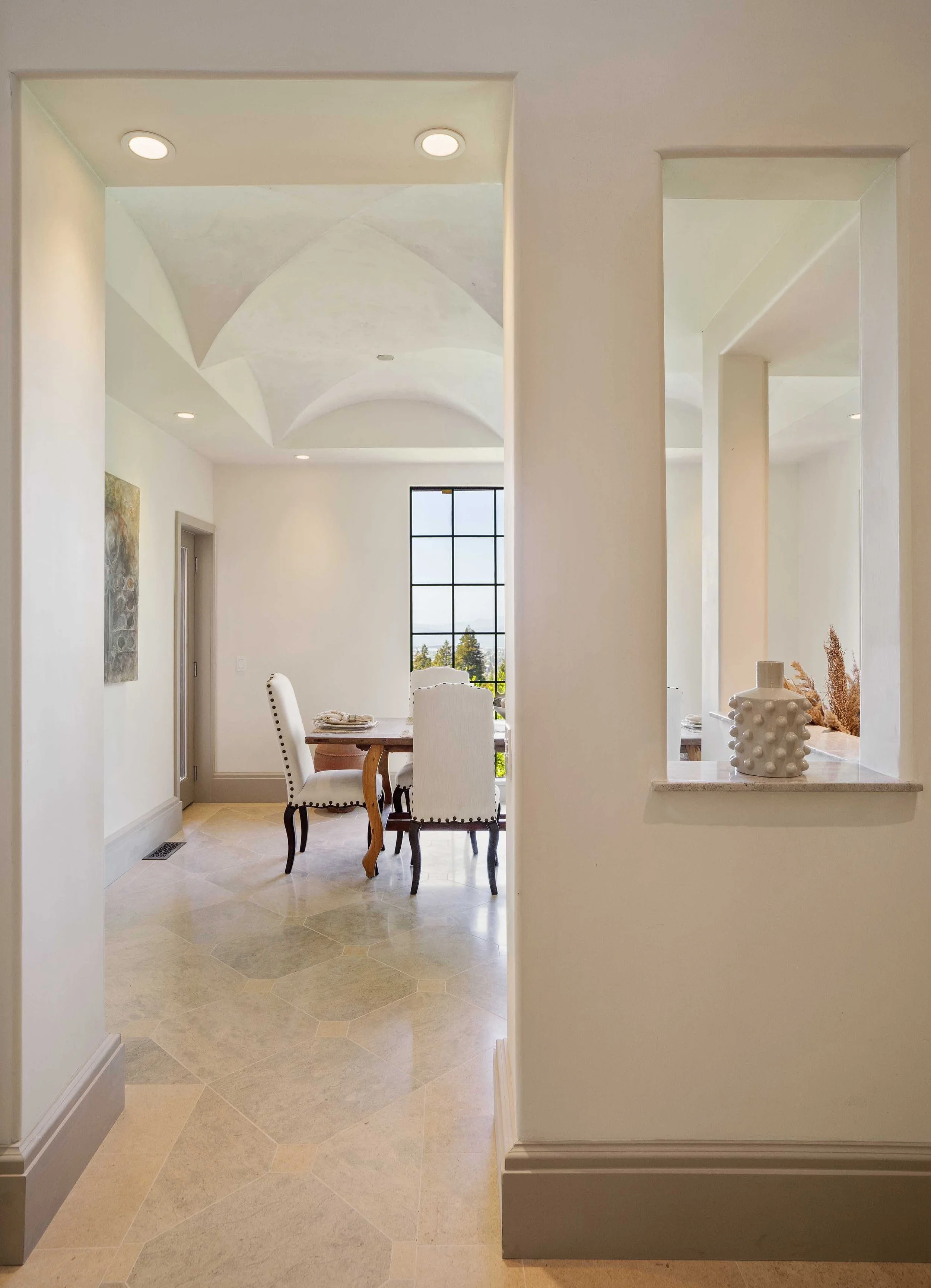
Dining Room
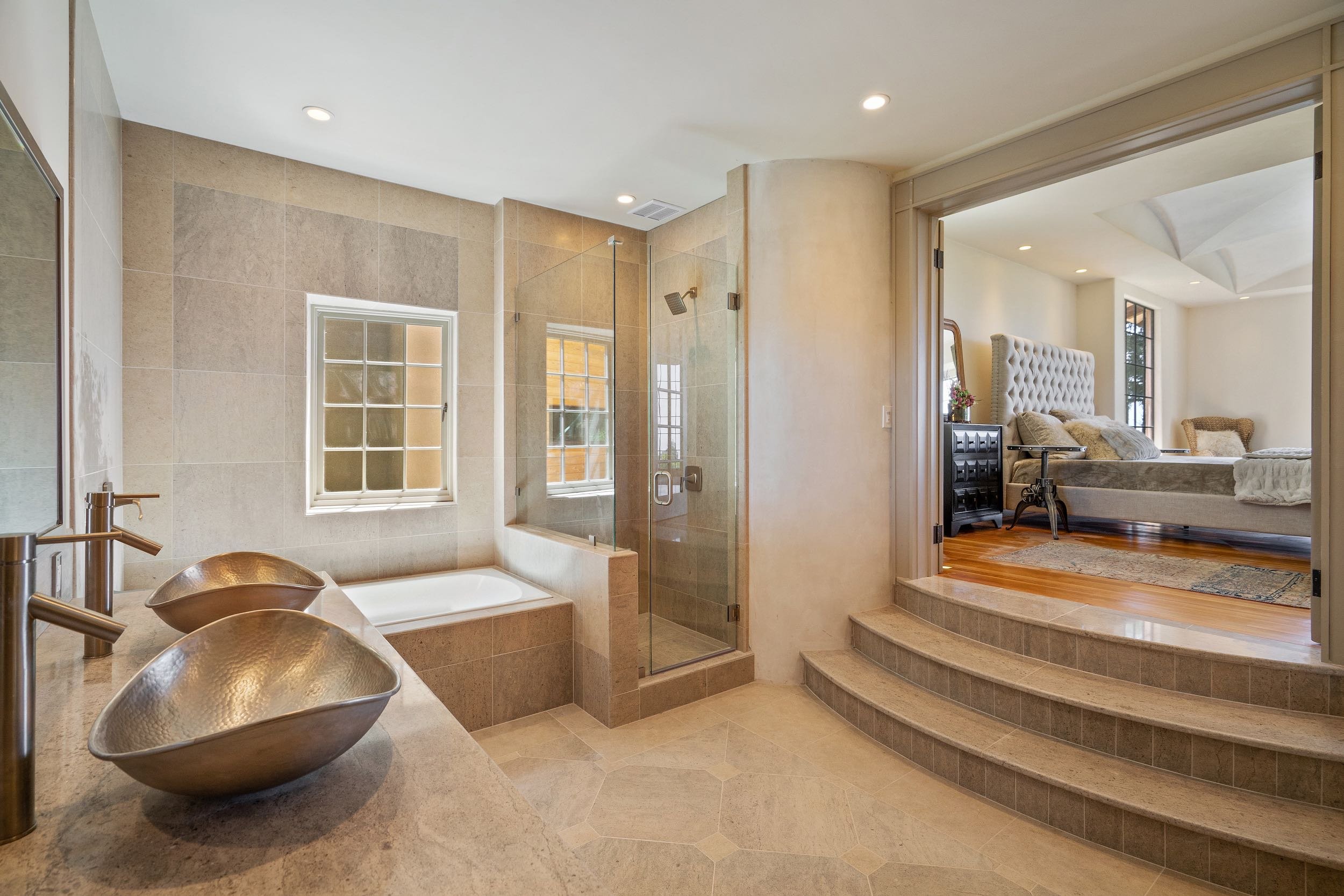
Master Bath
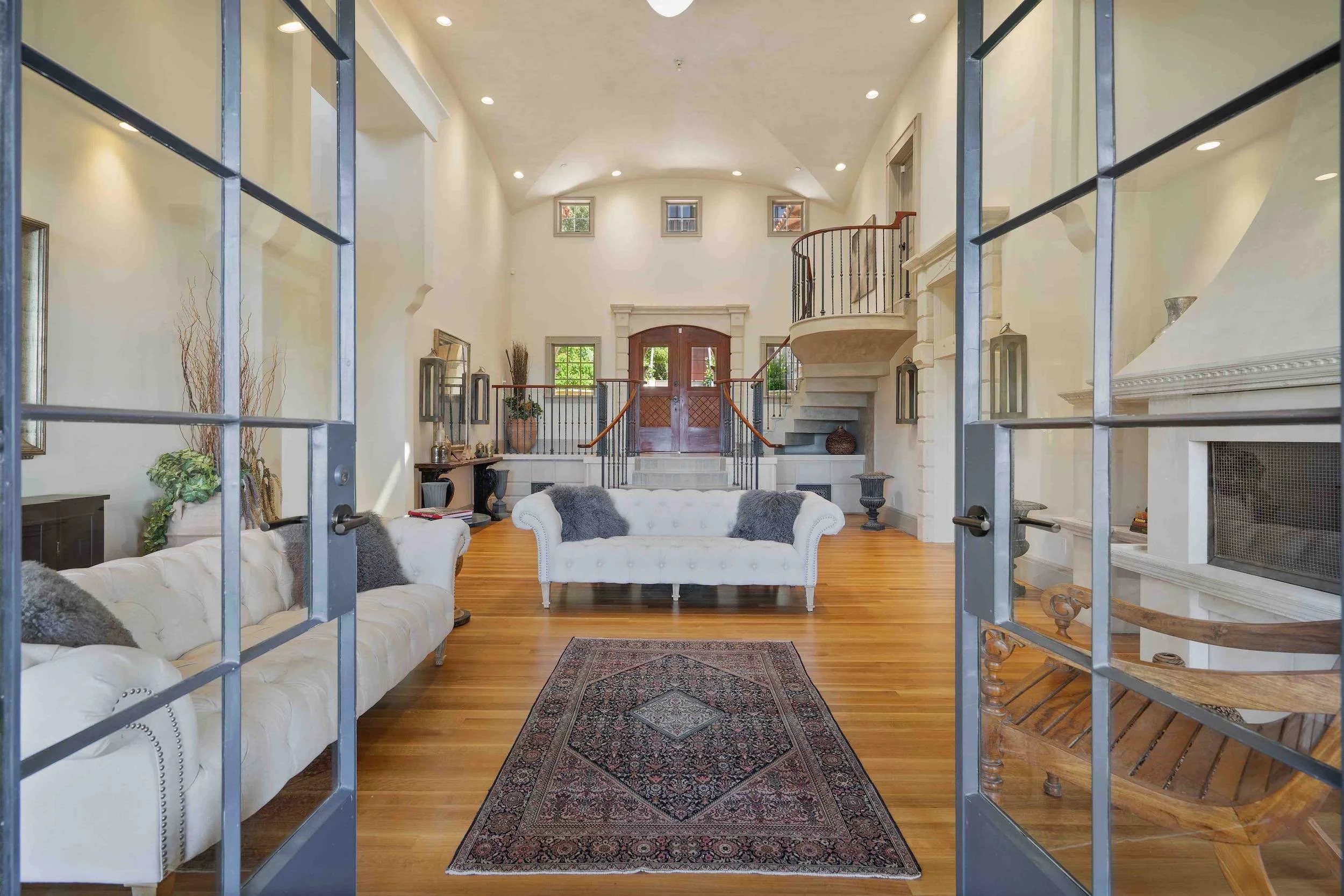
Great Hall
Case Study Two:
New Home in Claremont Neighborhood of Berkeley
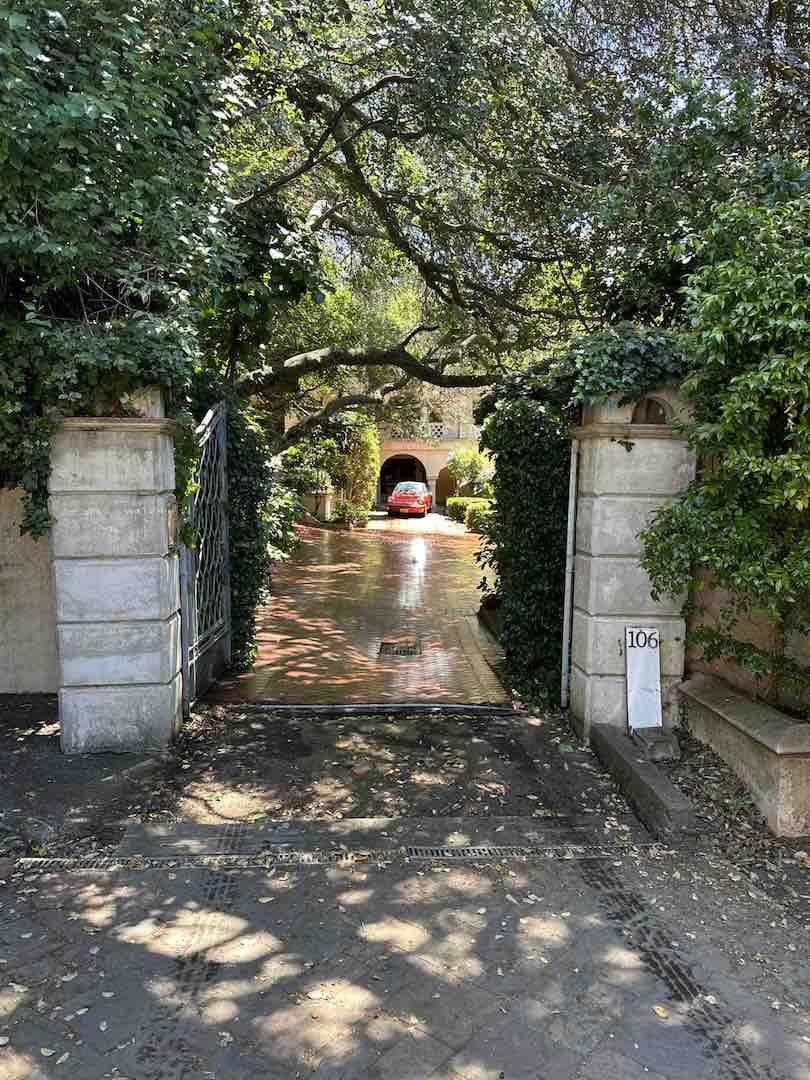
Front Gates
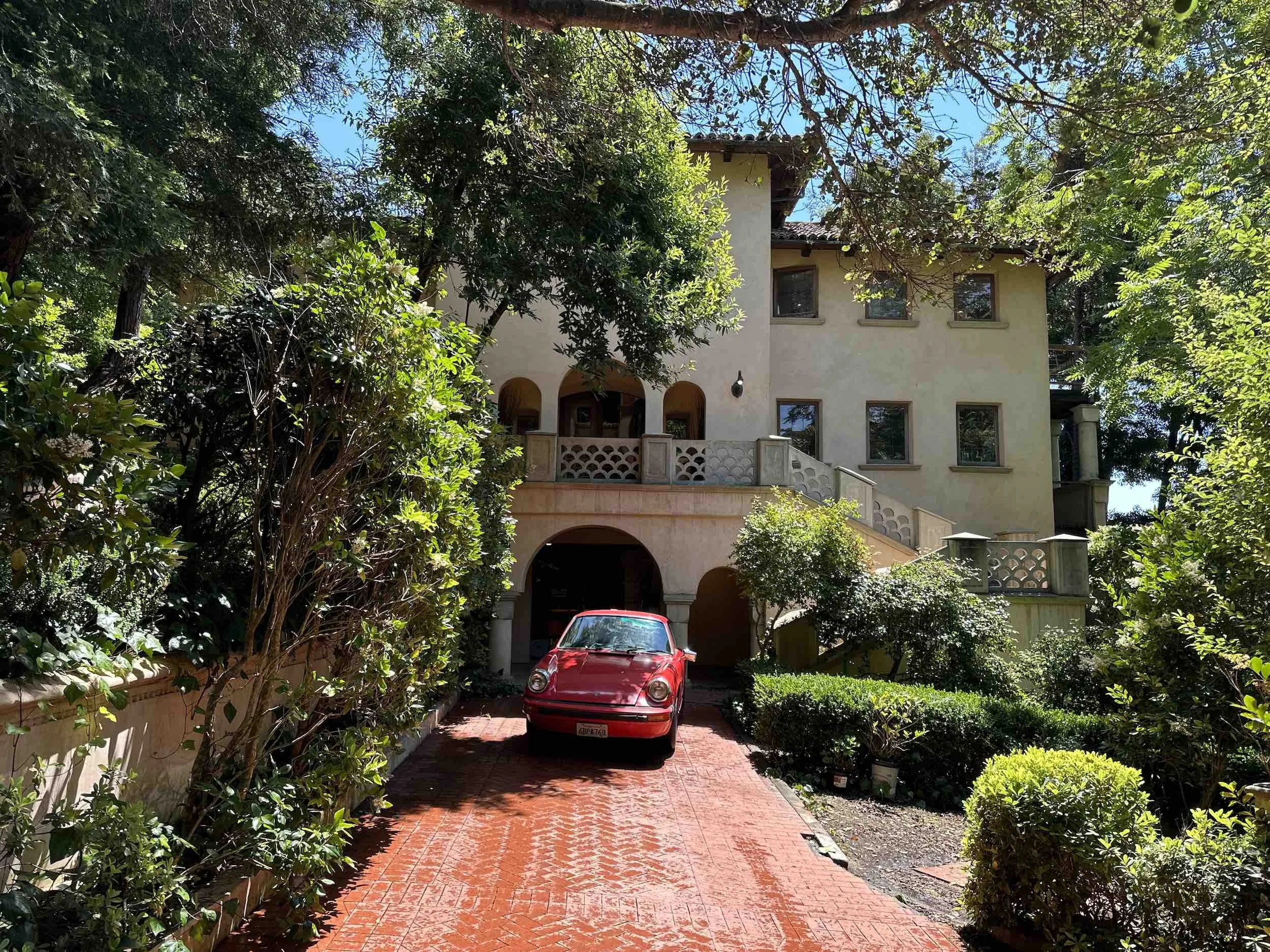
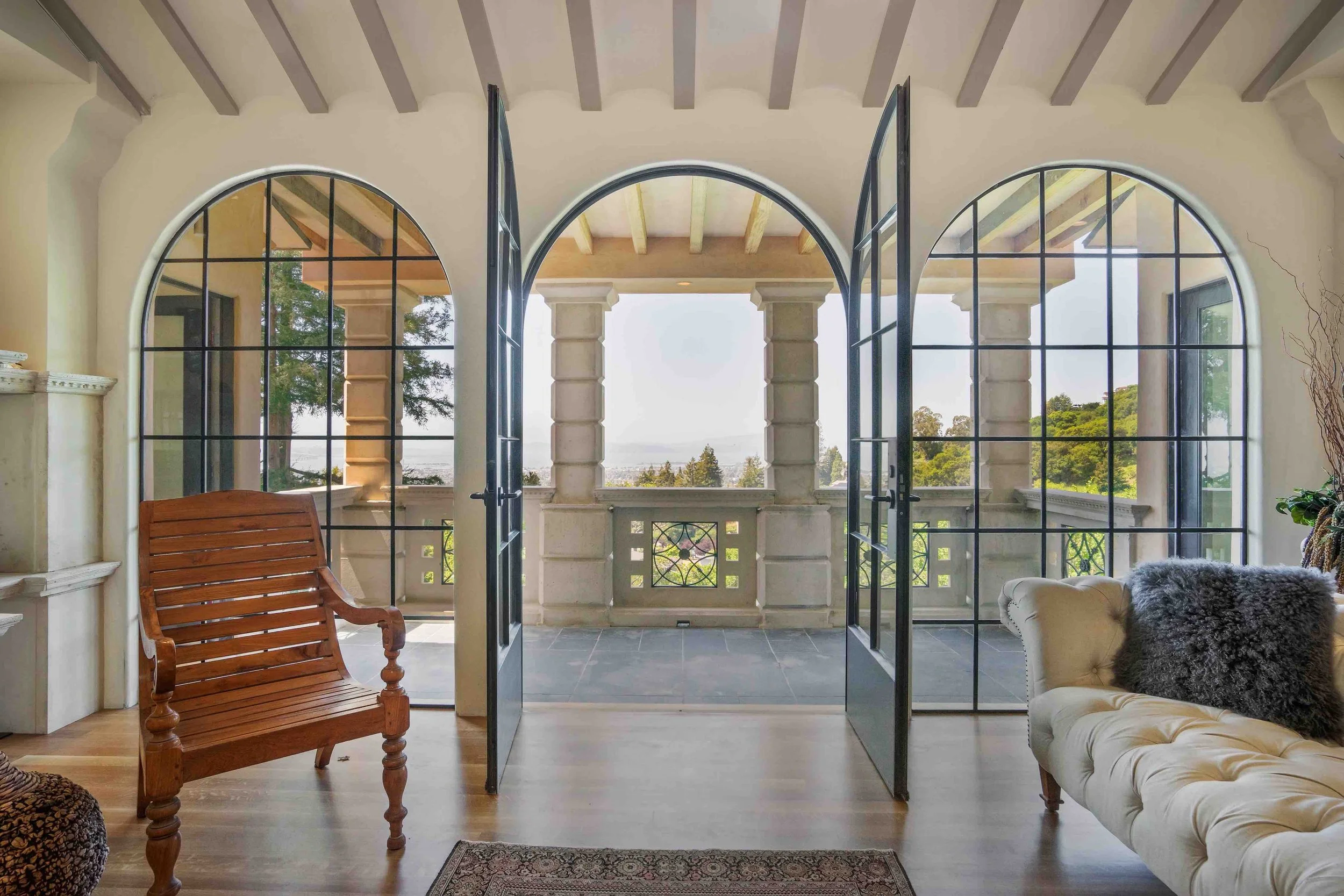
This new home, built in the wake of the Oakland Hills Firestorm, and designed in the spirit of ancient Italian Farmhouse Villas, required the adaptation of modern technologies of casting and forging to create details redolent of a lost era.
Front of Home
For example, instead of carved marble details, custom-cast colored concrete was used extensively, utilizing modern casting technology developed specifically for this project. The home was structured with massive timber framing, reinforced by modern shear-walls. The windows were custom built from Honduras Mahogany and leaded glass.
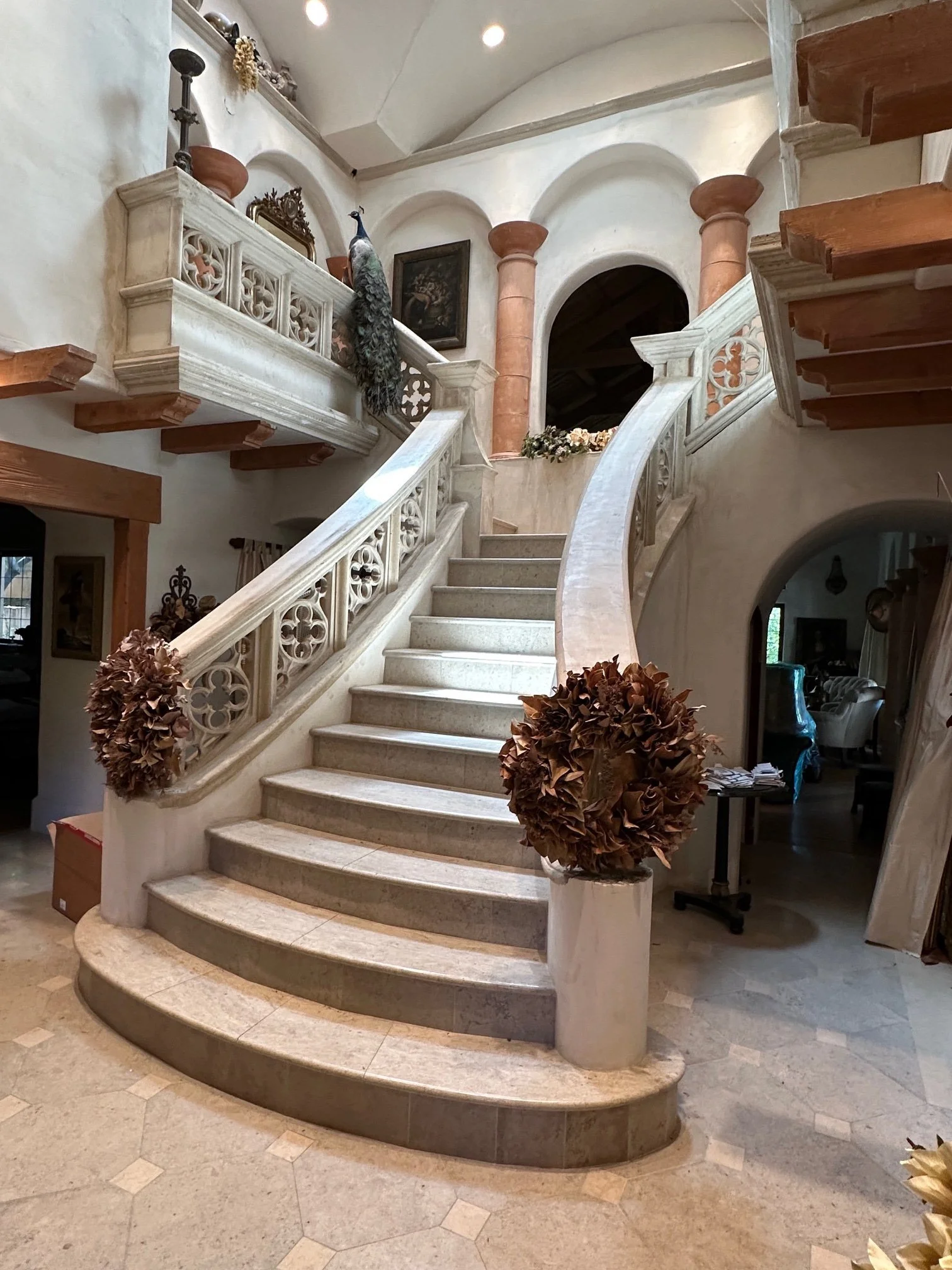
Grand Staircase
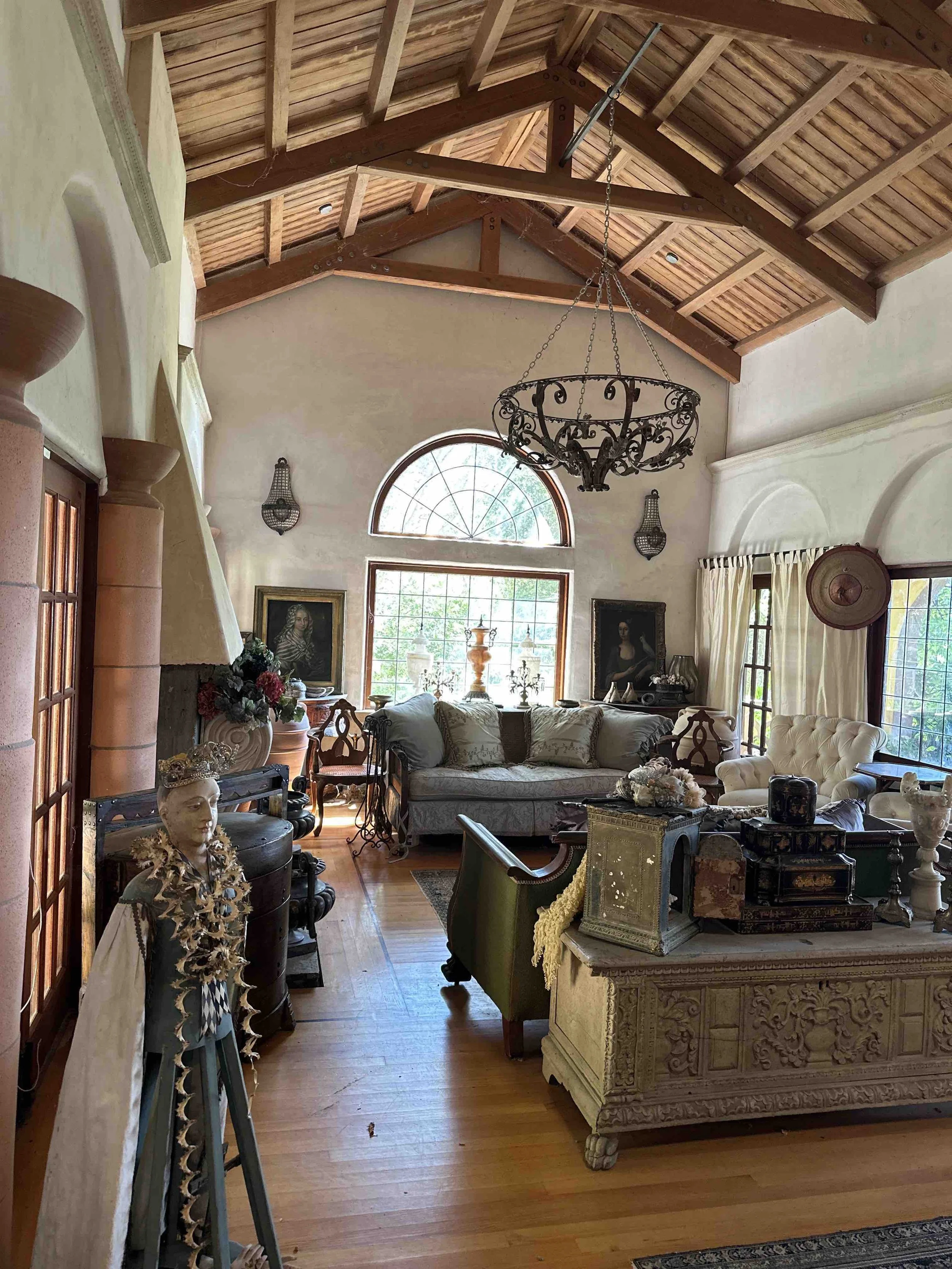
The Exterior design included broad timber-framed Florentine-styled Roof overhangs. the interiors were created by our Designer Extraordinaire, Lorna Hall.
Living Room
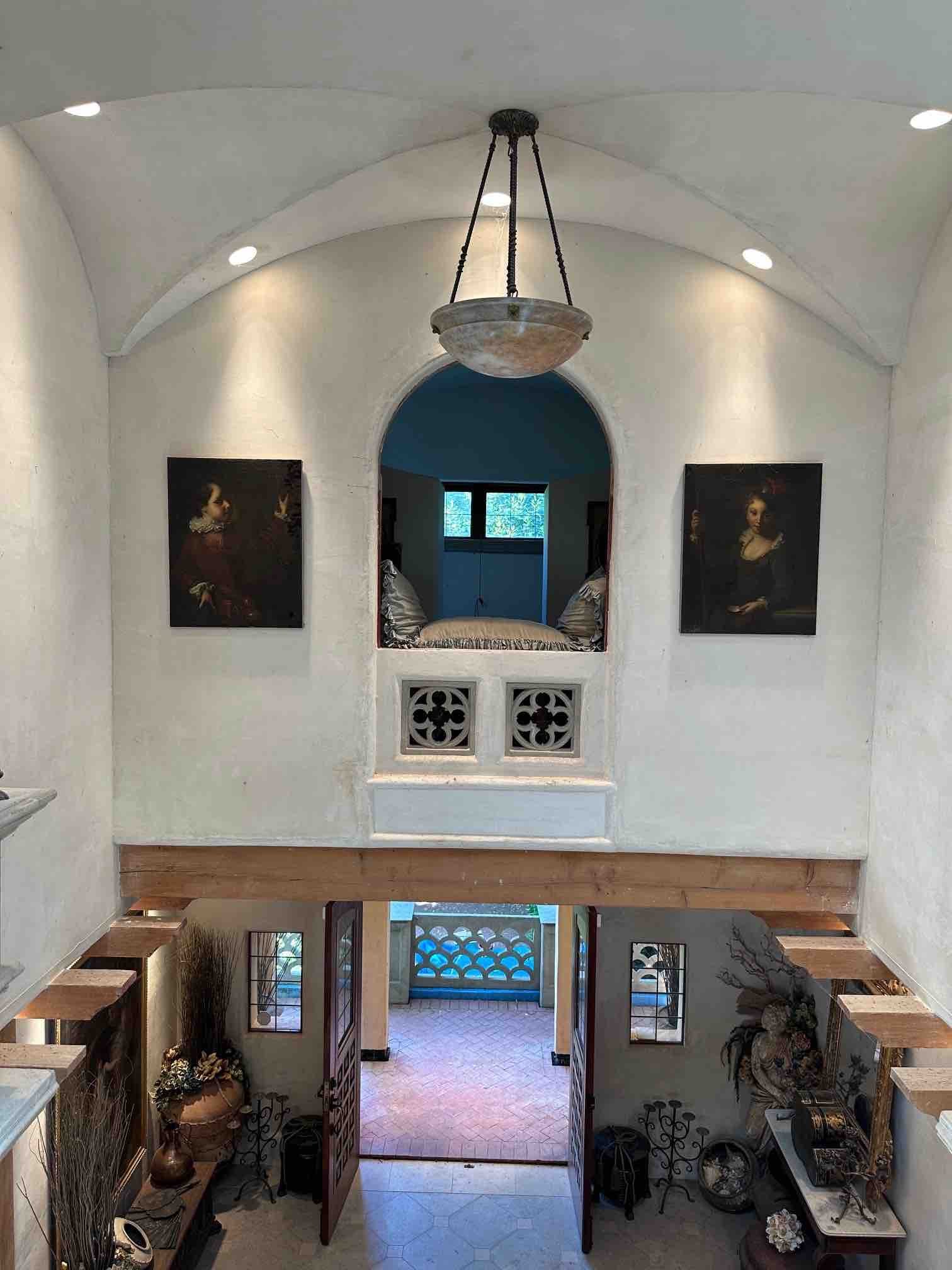
Great Hall
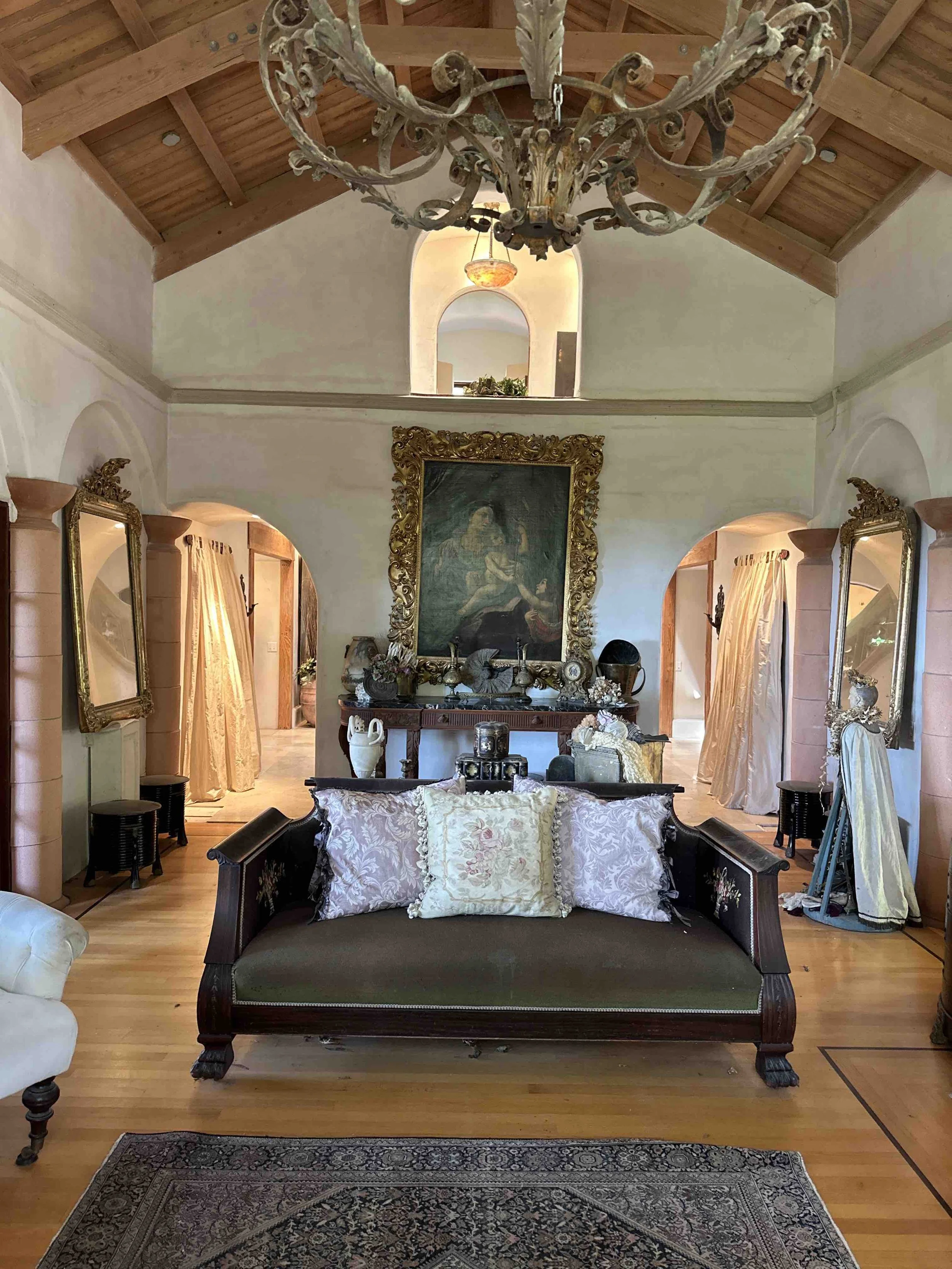
Living Room
Additional Photos of Claremont House in Berkeley
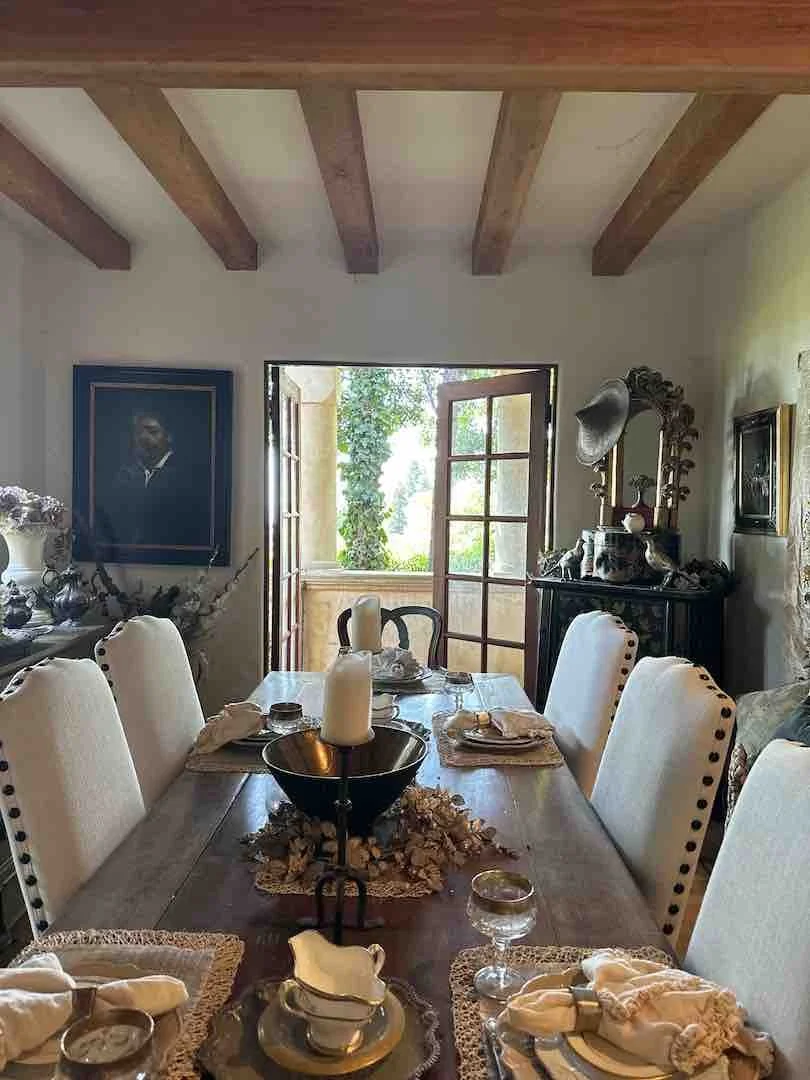
Dining Room

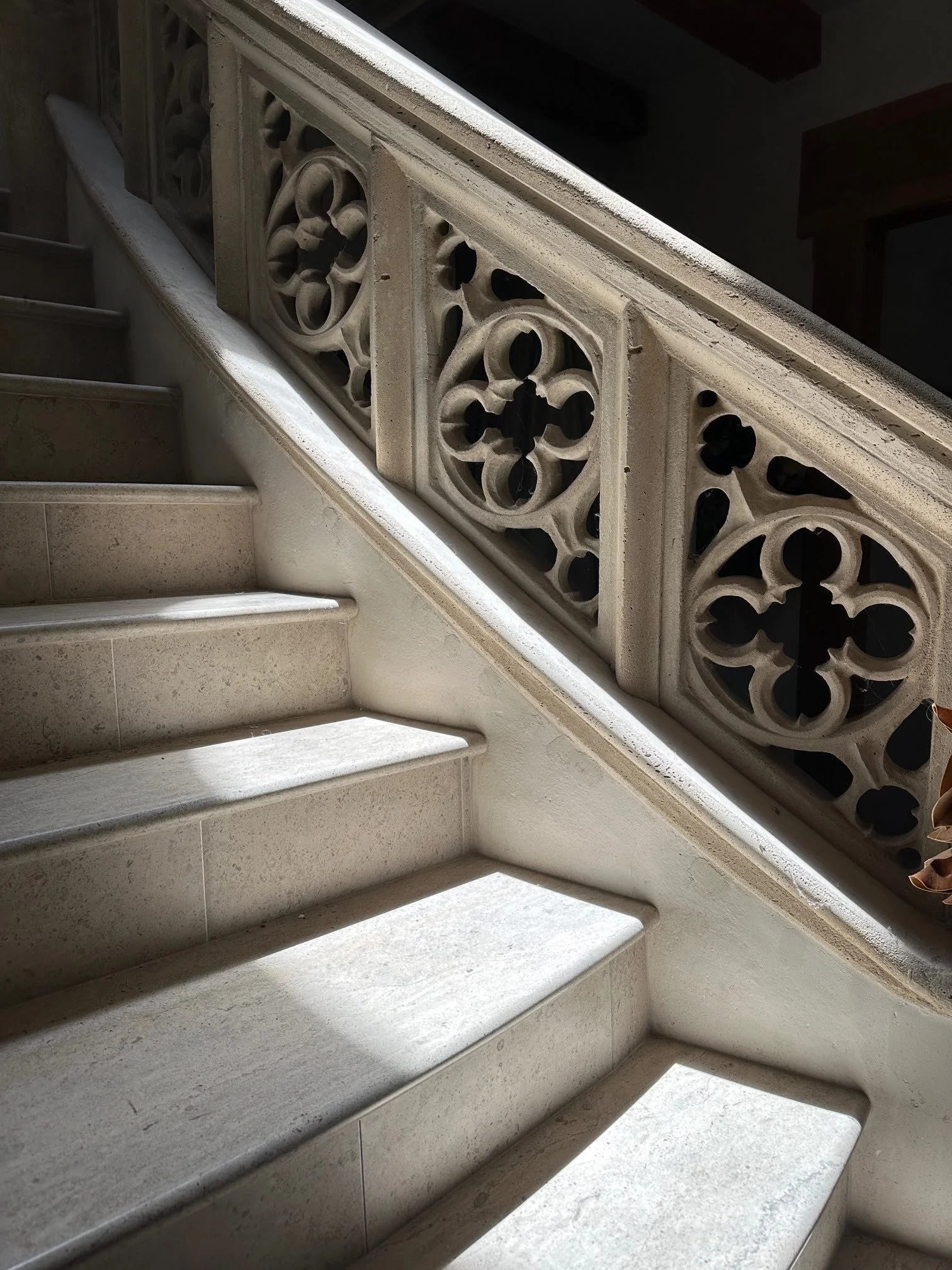
Stair Detail
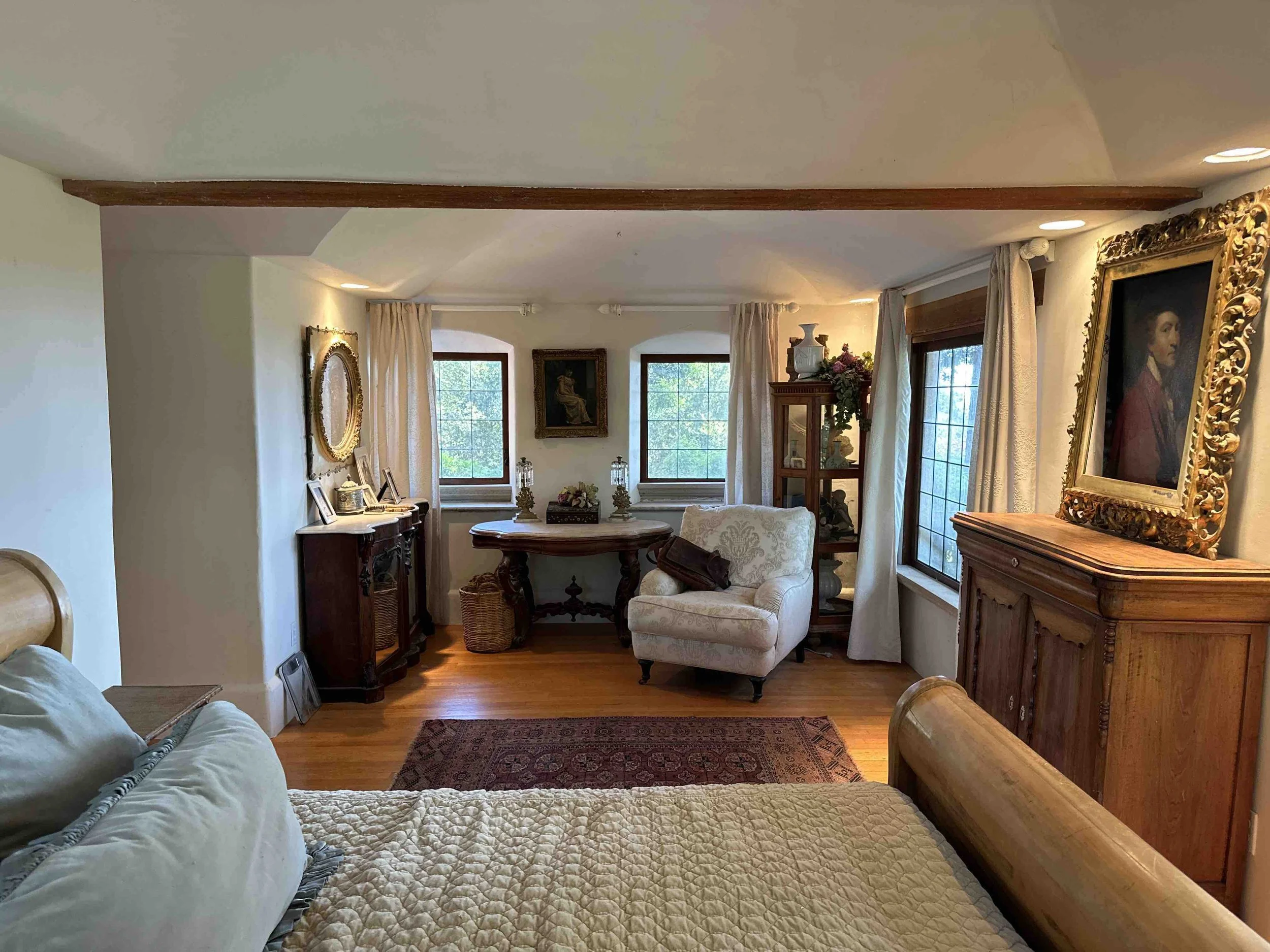
Master Bedroom
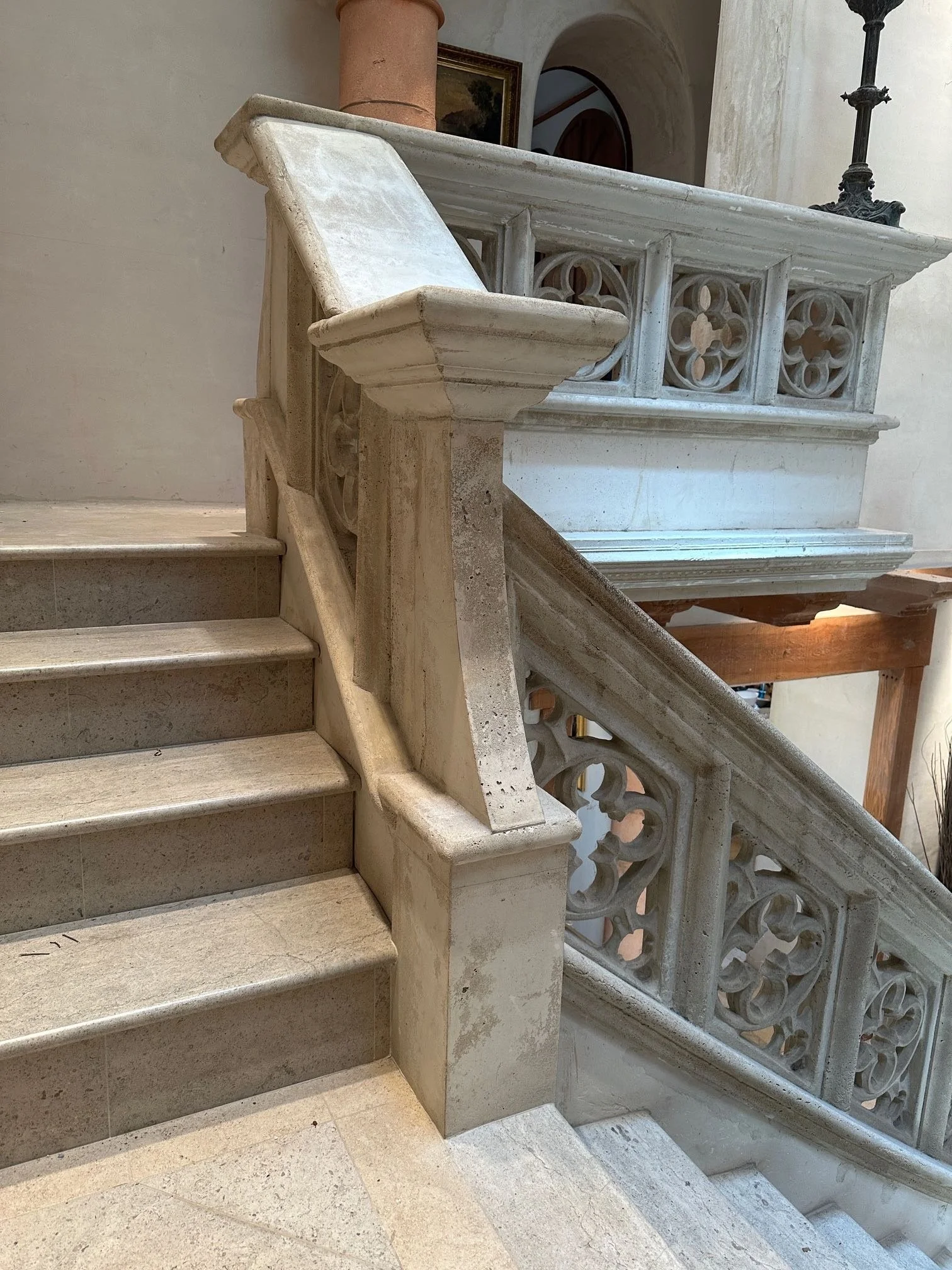
Stair Detail
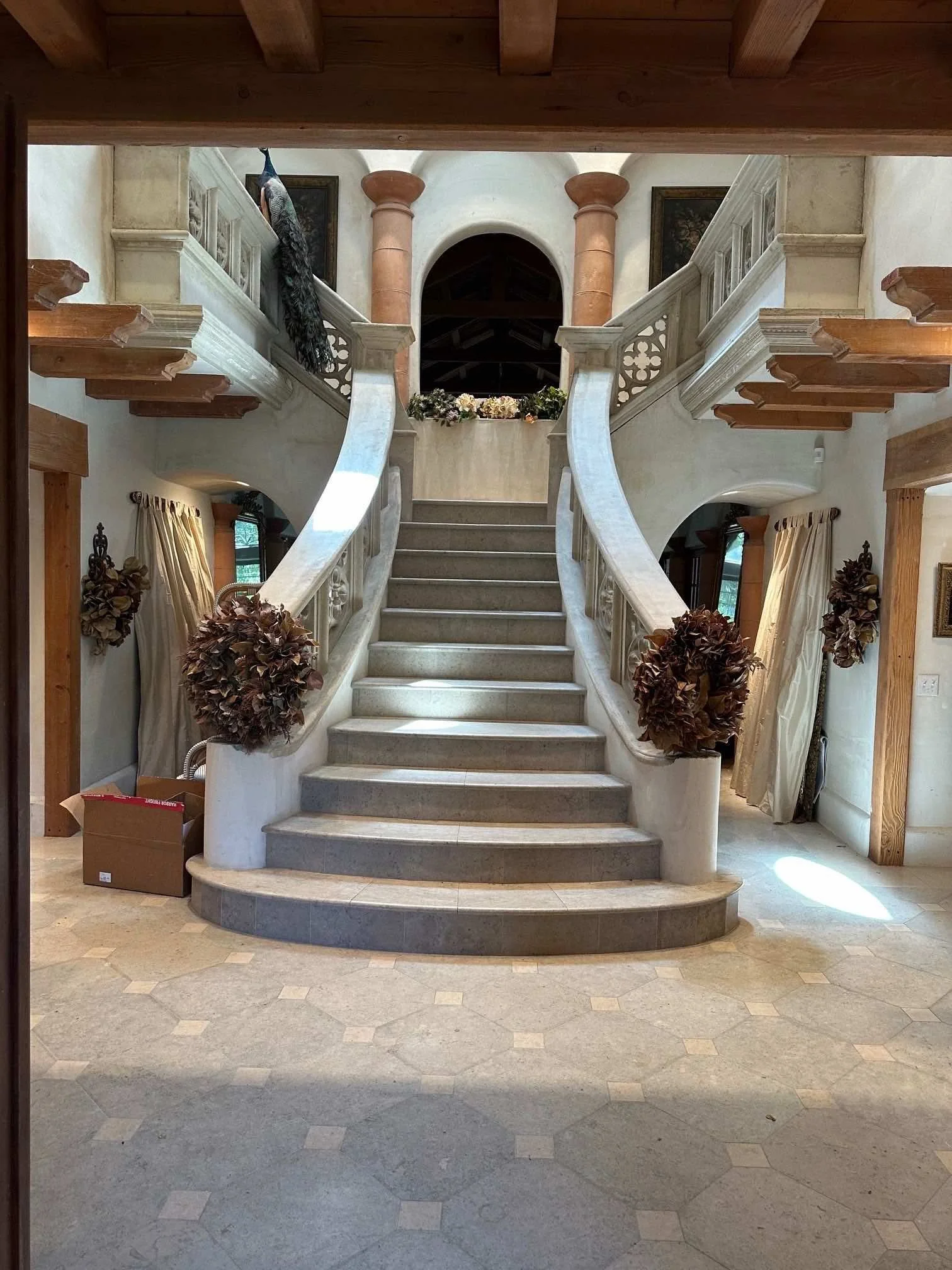
Grand Staircase
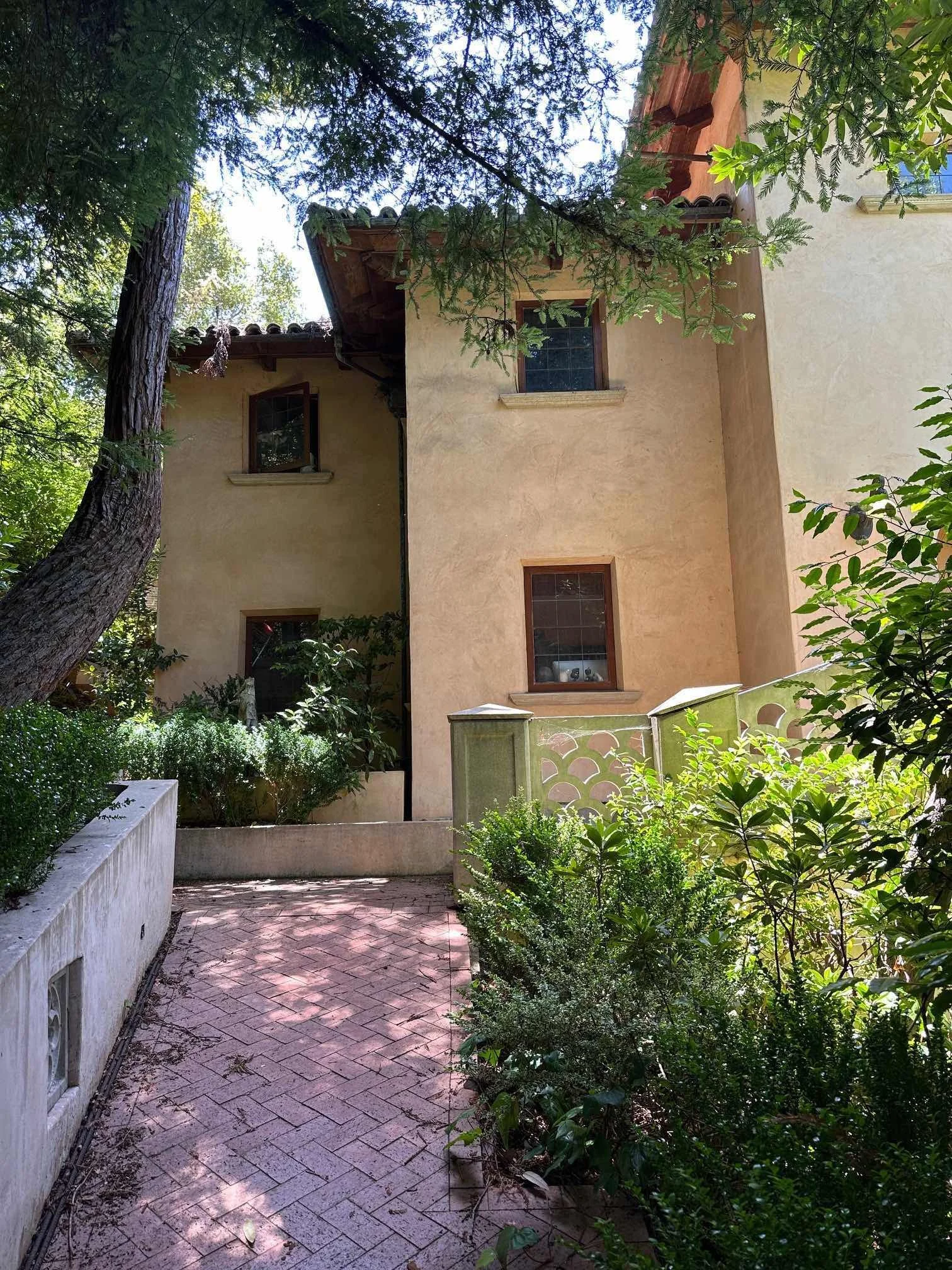
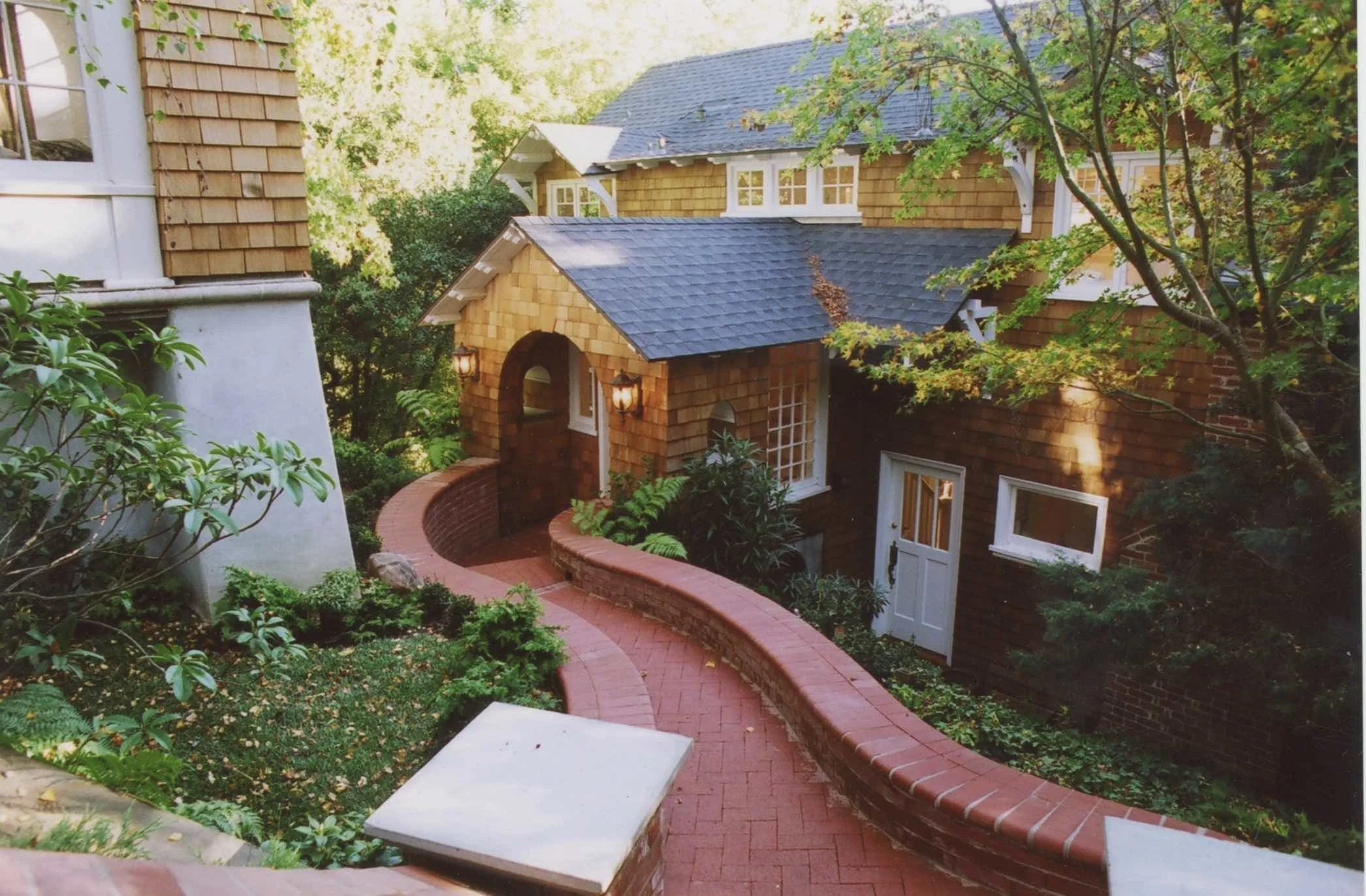
Entry Walkpath
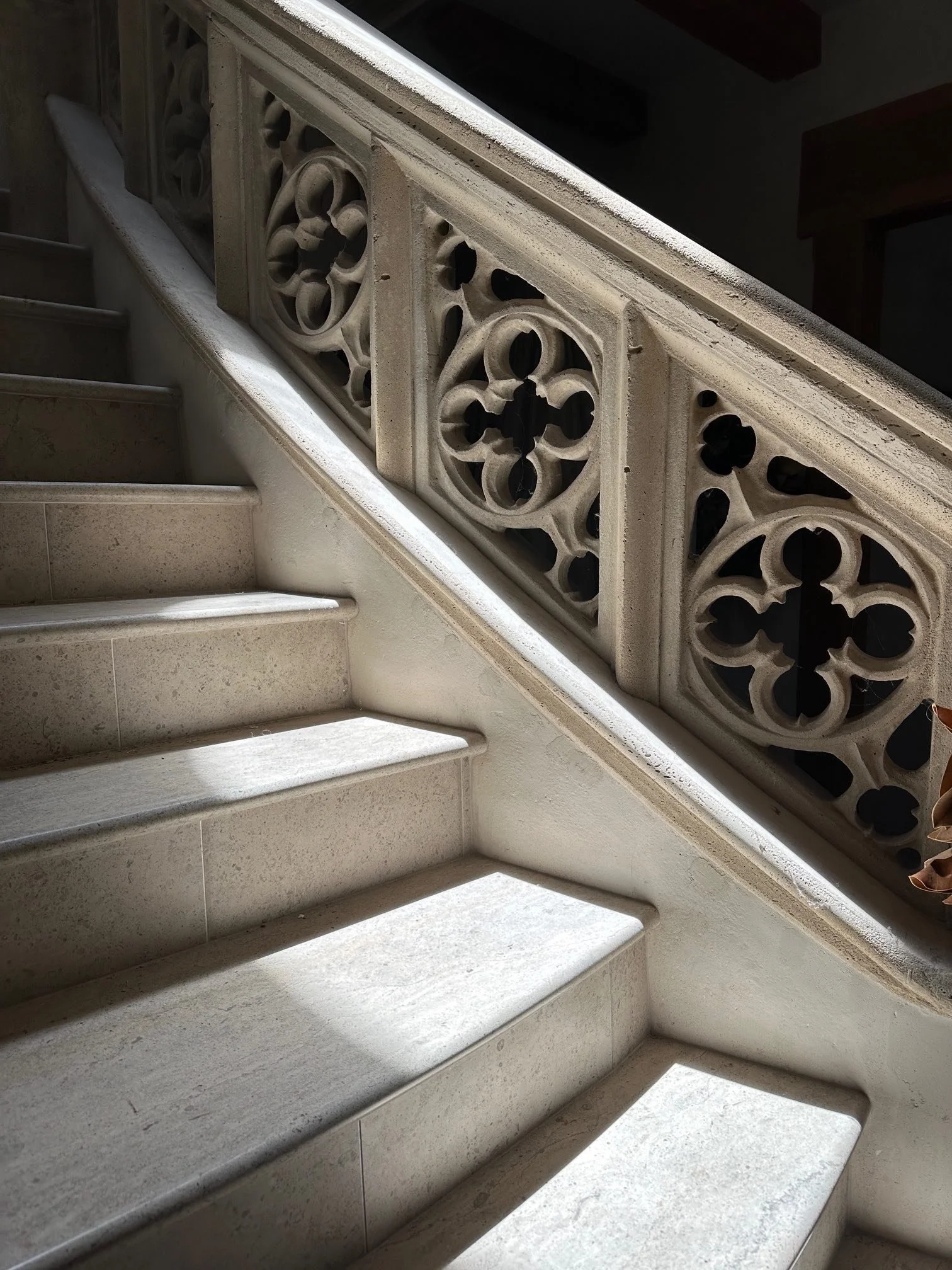
Staircase Detail
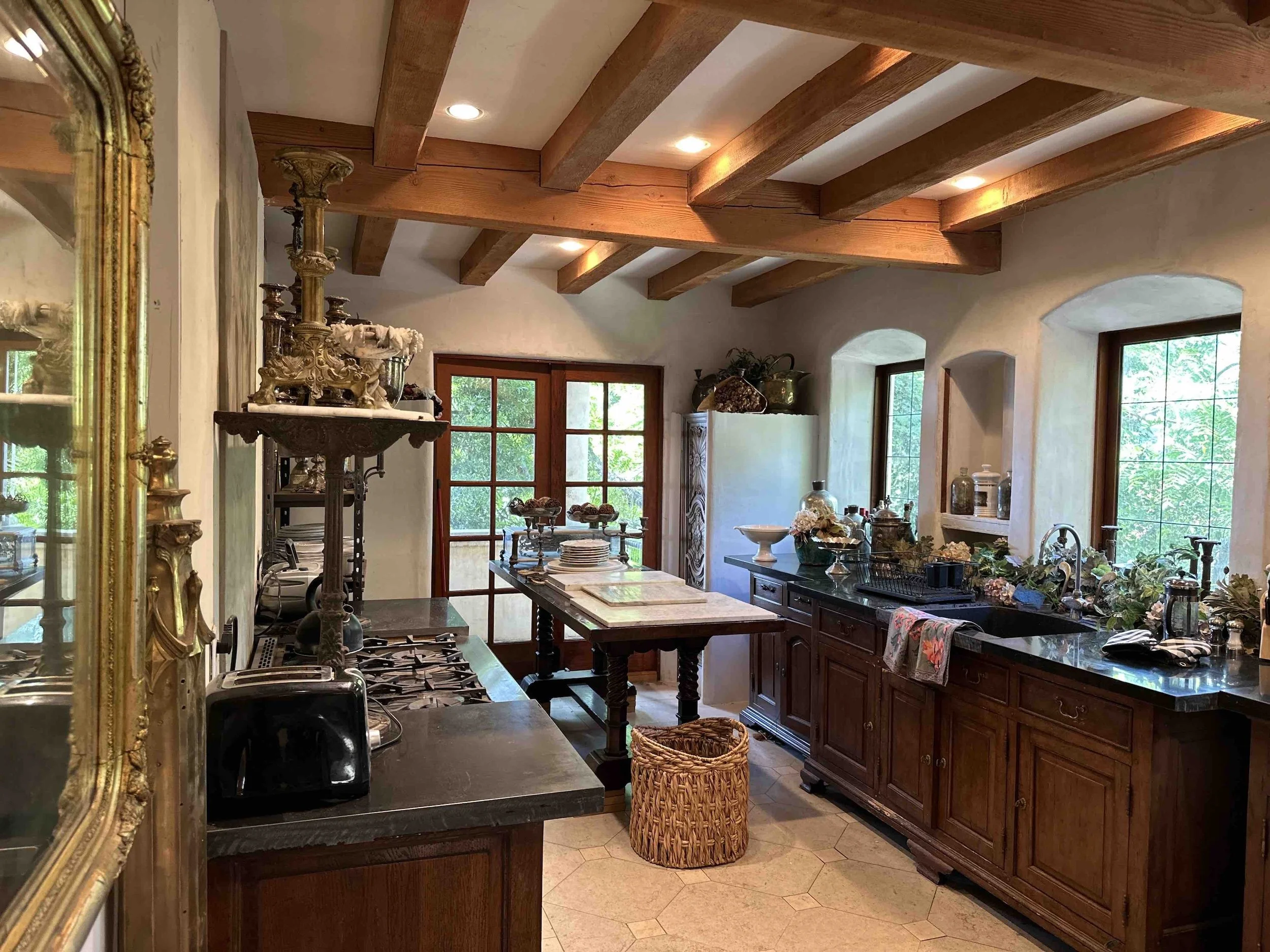
Kitchen
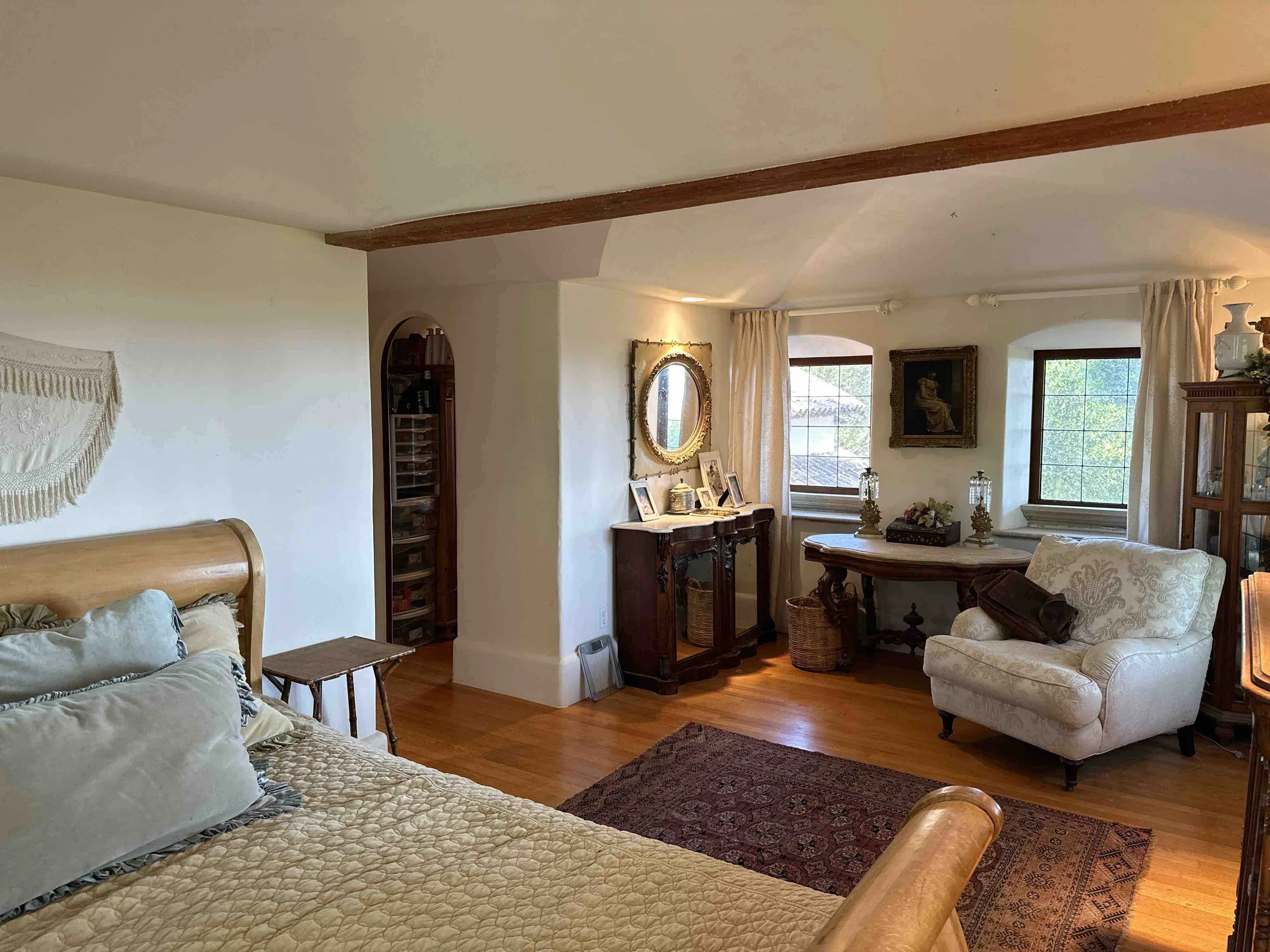
Master Bedroom
Case Study Three:
Rebuilt home in Sausalito

Front of Home
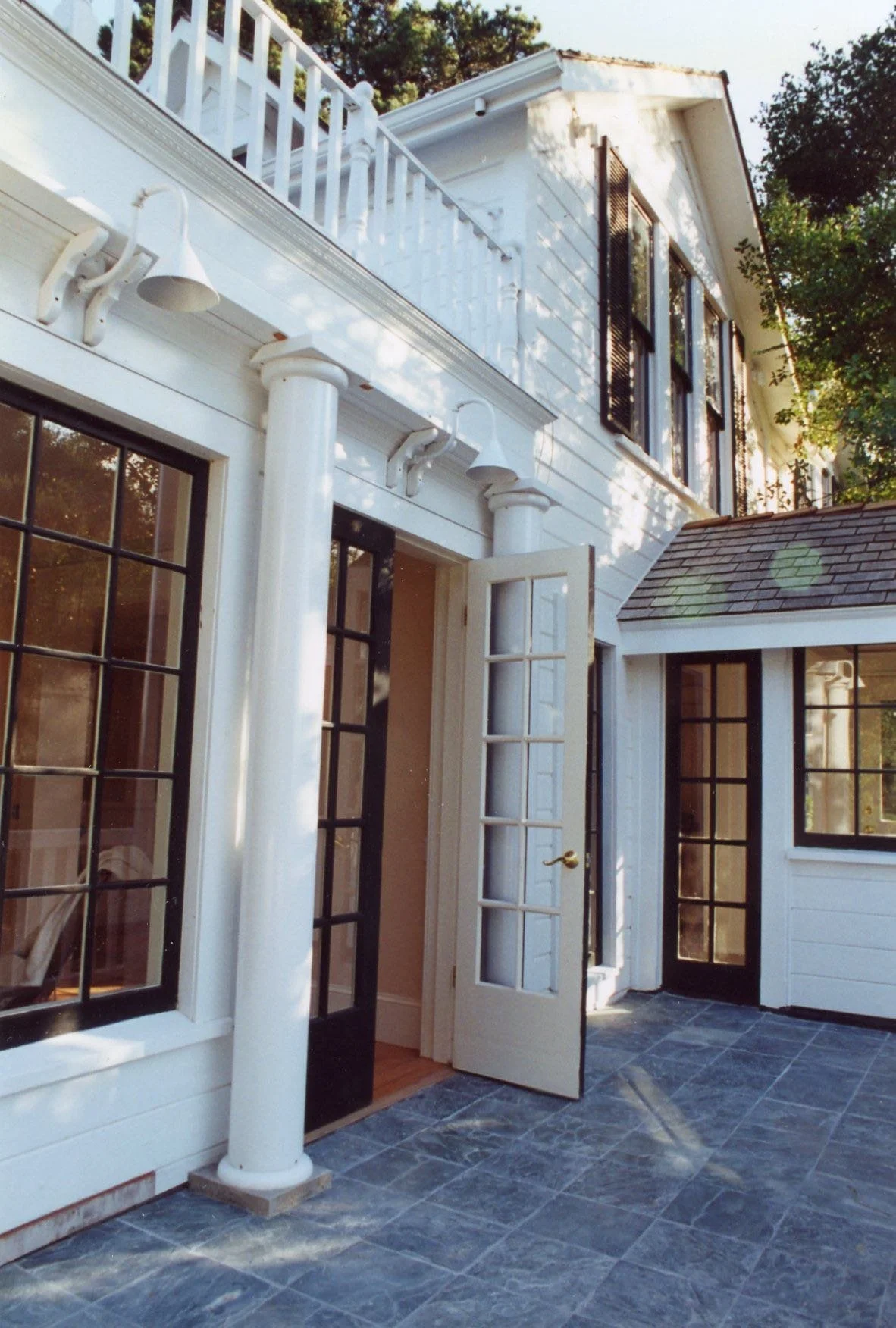
The new owners of this 19th Century, bay view home in Sausalito loved the “Banana Belt” location, the views and the landscaped grounds, but they found the interior cramped and dismal. The Living Room was little more than a hallway and there were only two bedrooms.
Patio
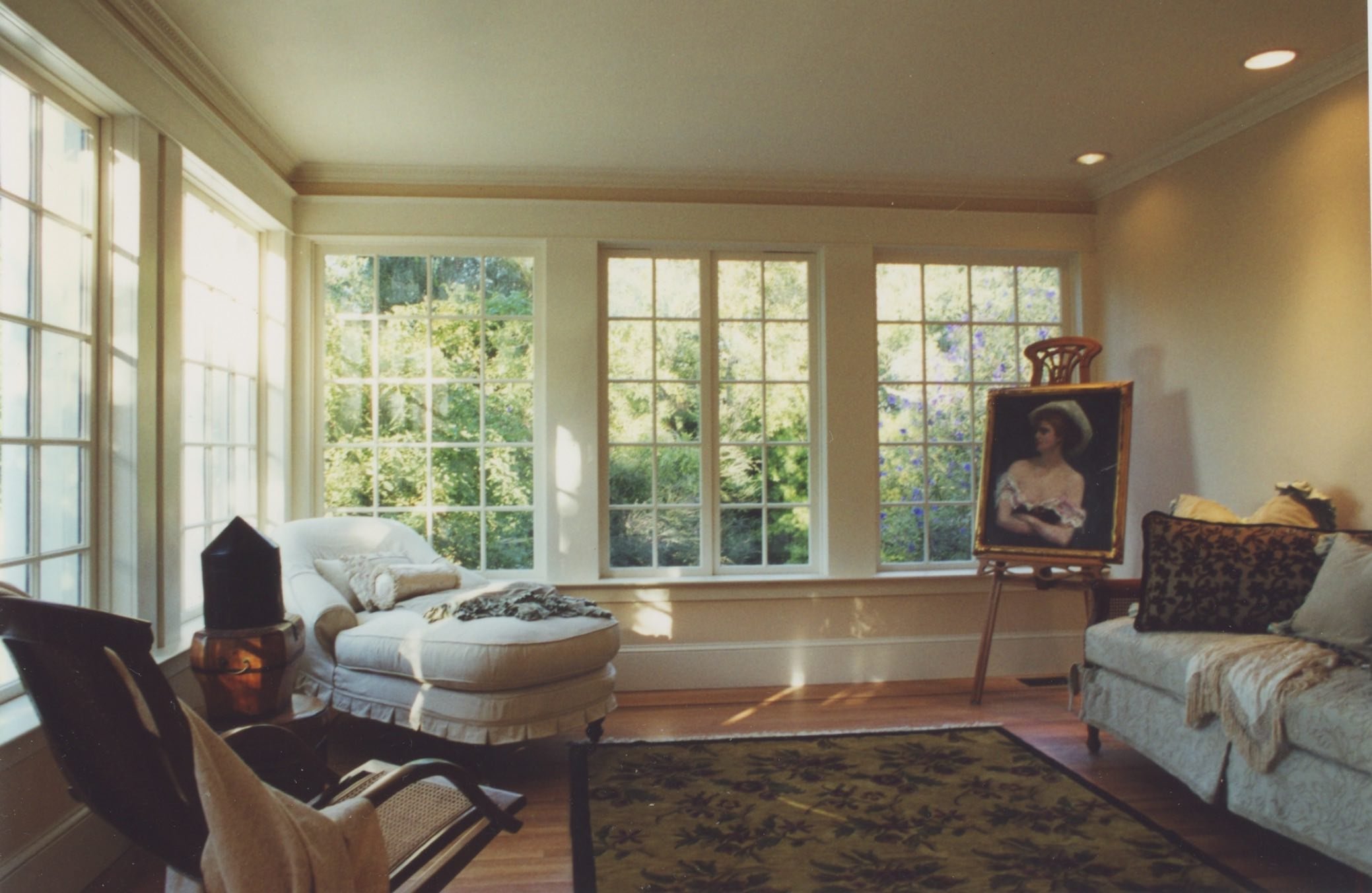
New Conservatory/Living Room

Our design expanded the building sensitively by recasting it more authentically in its original 19th century Colonial style and then creating additions for a new large Living Room/Conservatory and an additional Bedroom, an additional Bath, a Foyer and a Garage. We also redesigned the interiors with better lighting, finishes, details and a dazzling Kitchen.
Kitchen
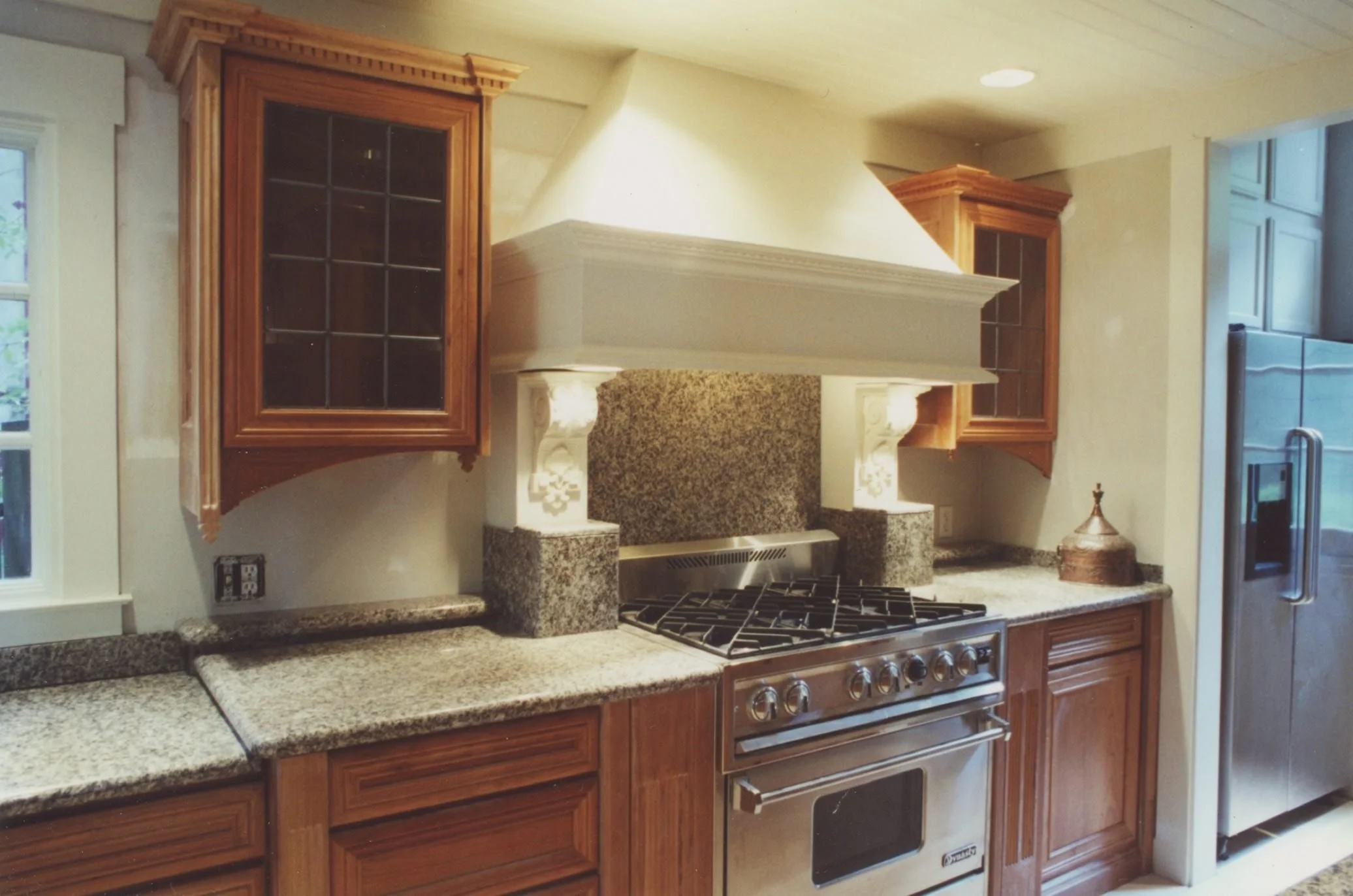
Kitchen
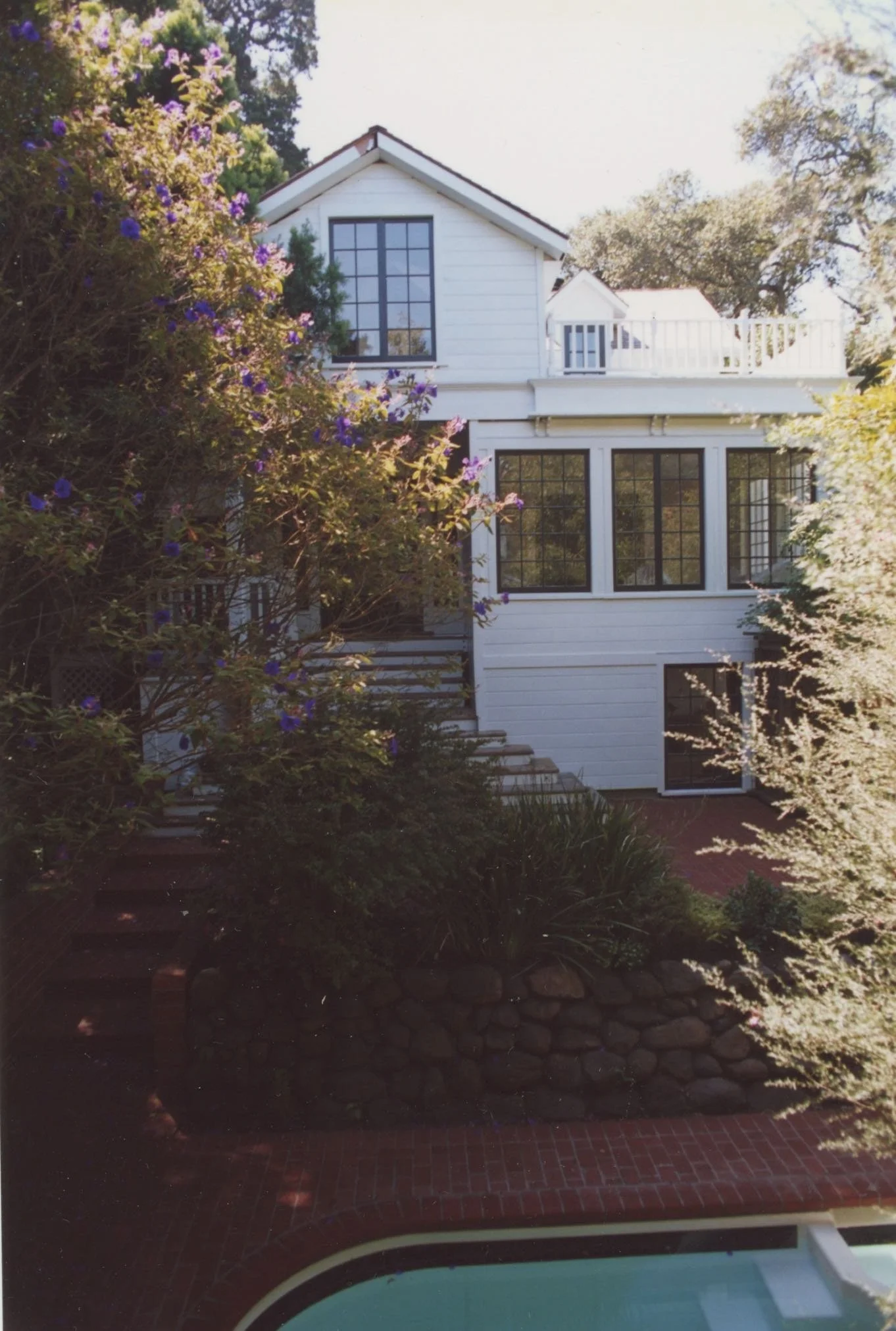
Several years later, when the owners moved away, their home sold for more than 300% of its total Cost. That sale yielded the seller the highest price per square foot of any home in Marin County thus far. The buyer was the renowned author, Amy Tan.
Pool-Garden Area
Case Study Four:
Rebuilt Home in Mill Valley
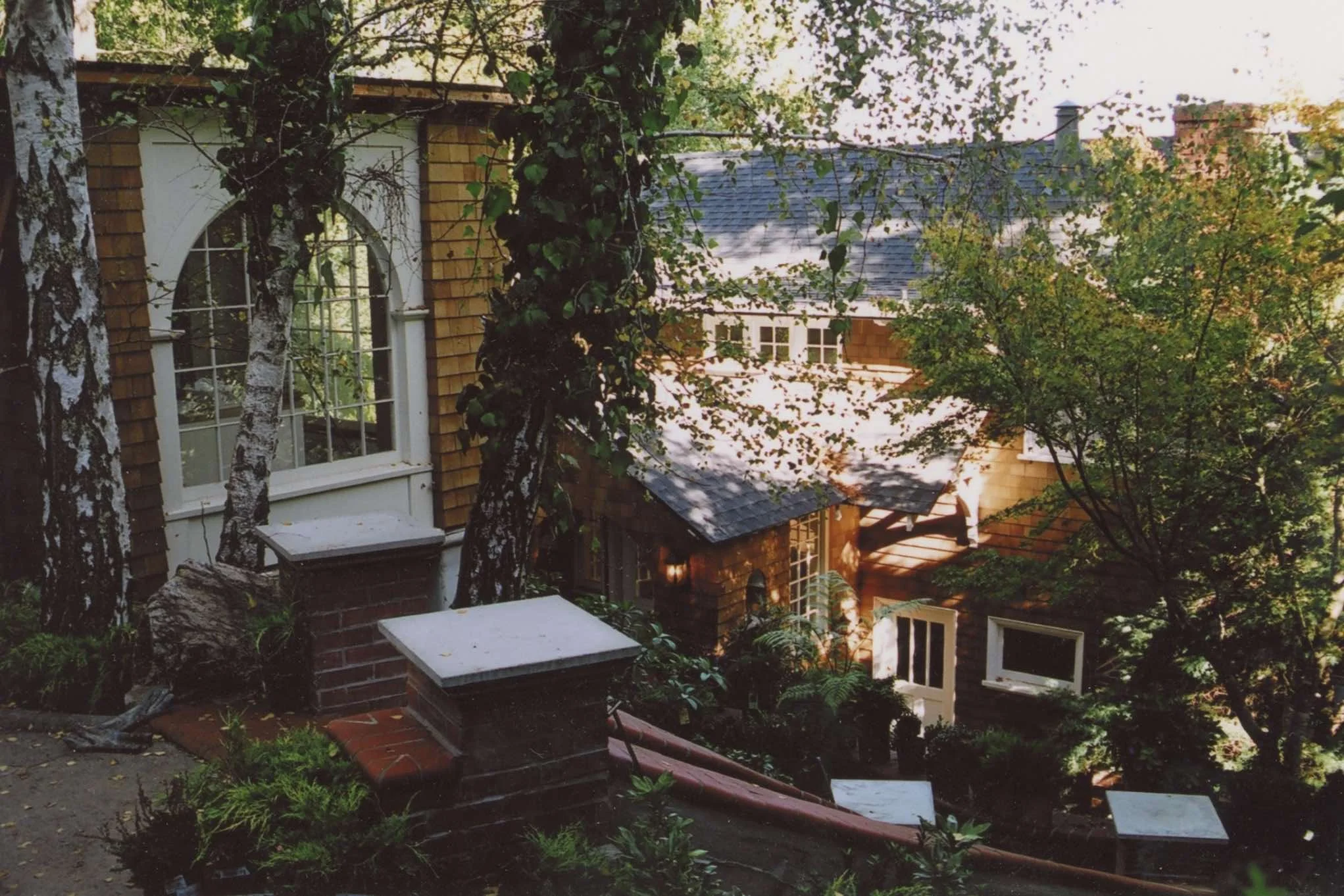
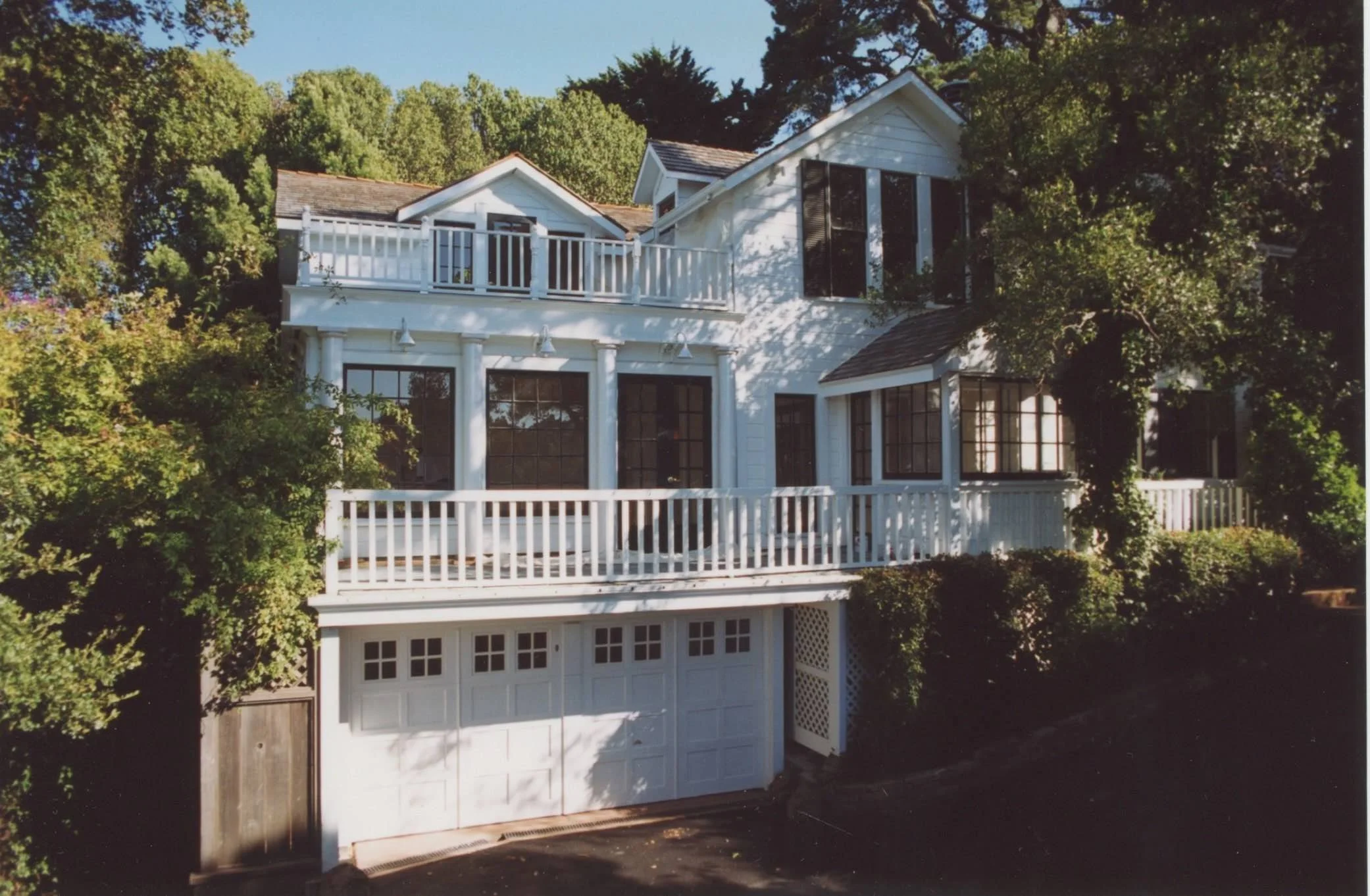
Front of Home
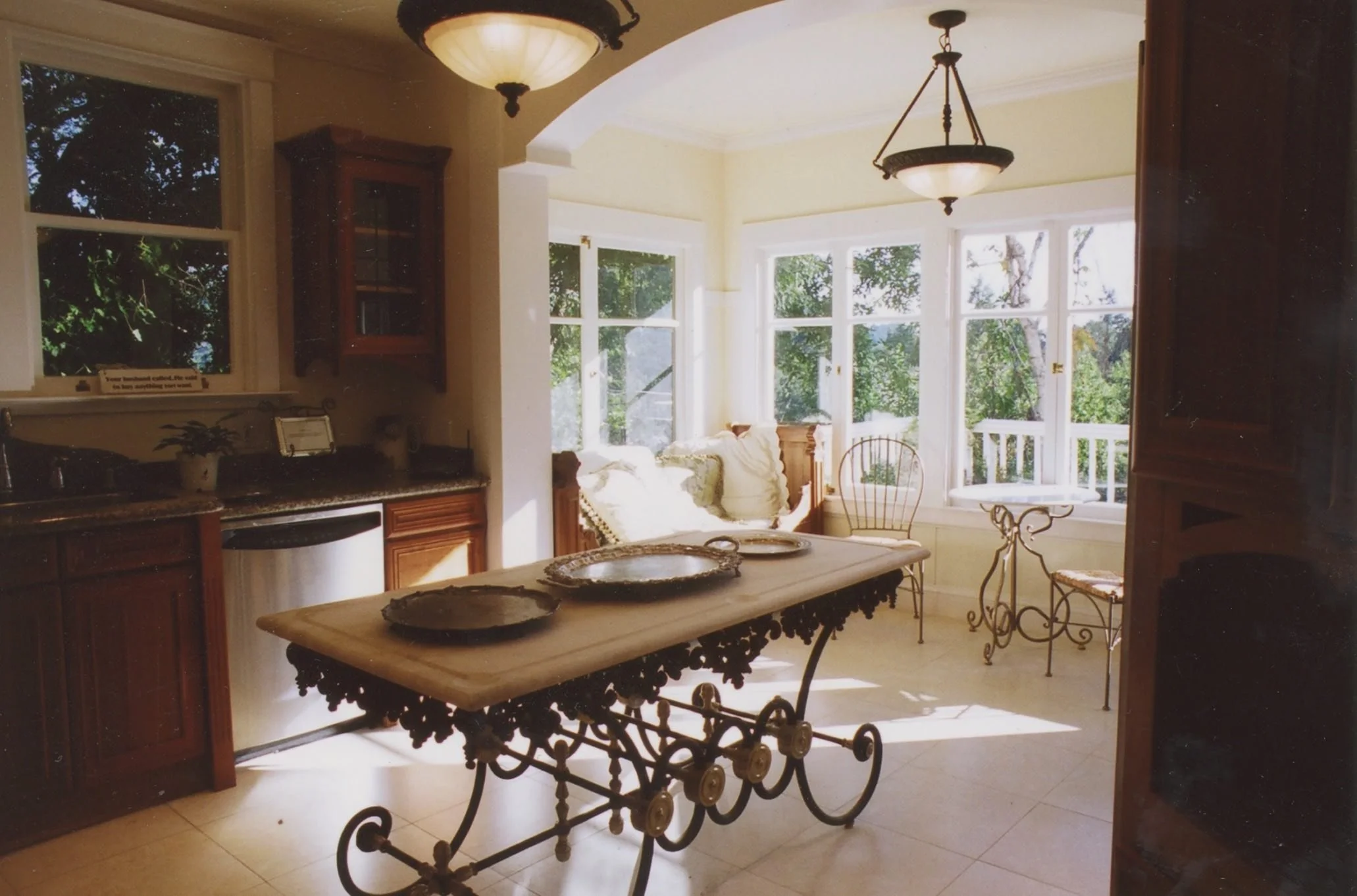
The owner’s program for this Shingle-Style/Craftsman home, located in a steeply sited redwood forest in Mill Valley, included a total gut remodel inside and out, new bedrooms Addition, dormers, carport and Gazebo.
Kitchen
The most troubling aspect of the existing home was the steep drop from the drive way down to the Entrance door. This had significantly lowered the home’s marketability and potential sale price.
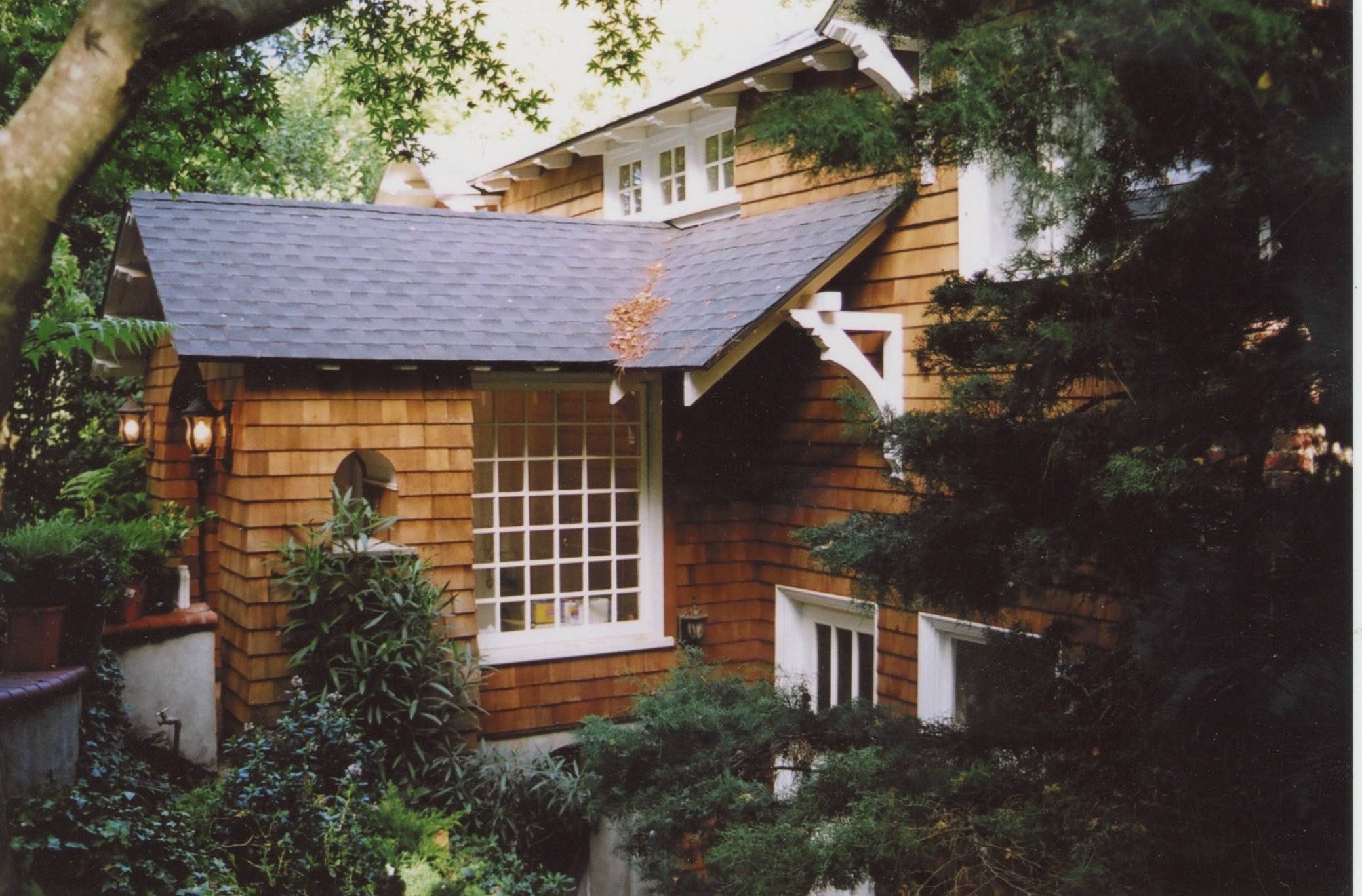
New Foyer /Entrance
Our solution was to create a new Entrance point, along with a new Foyer, which was located at the stair landing between the First and Second Floor. That changed both the perceived, and the actual, vertical drop of the Entry path. A meandering garden walkway was then created to enliven the Entry experience.
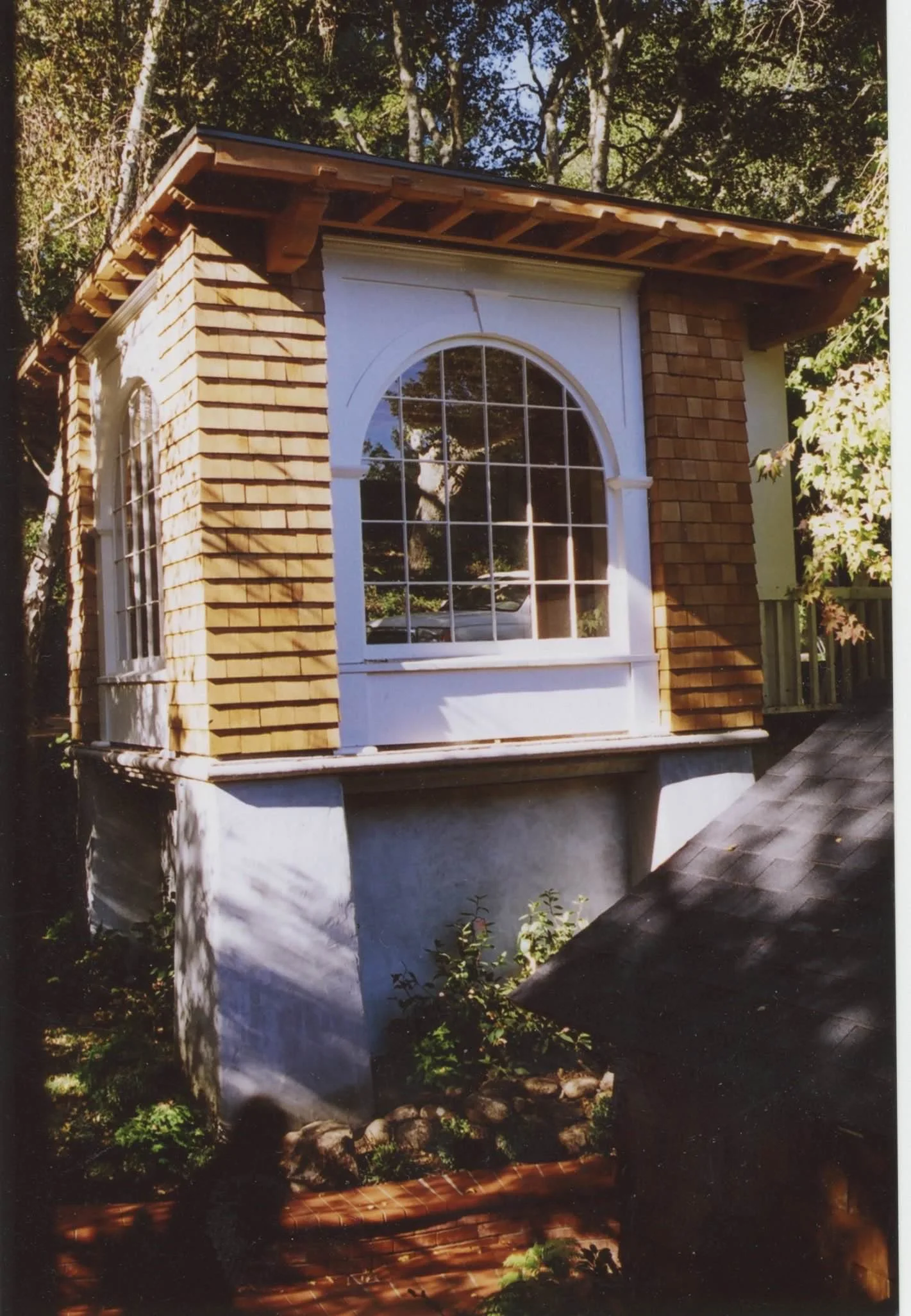
Gazebo
A few years later the property sold for about 230% of the owners total investment in the property.
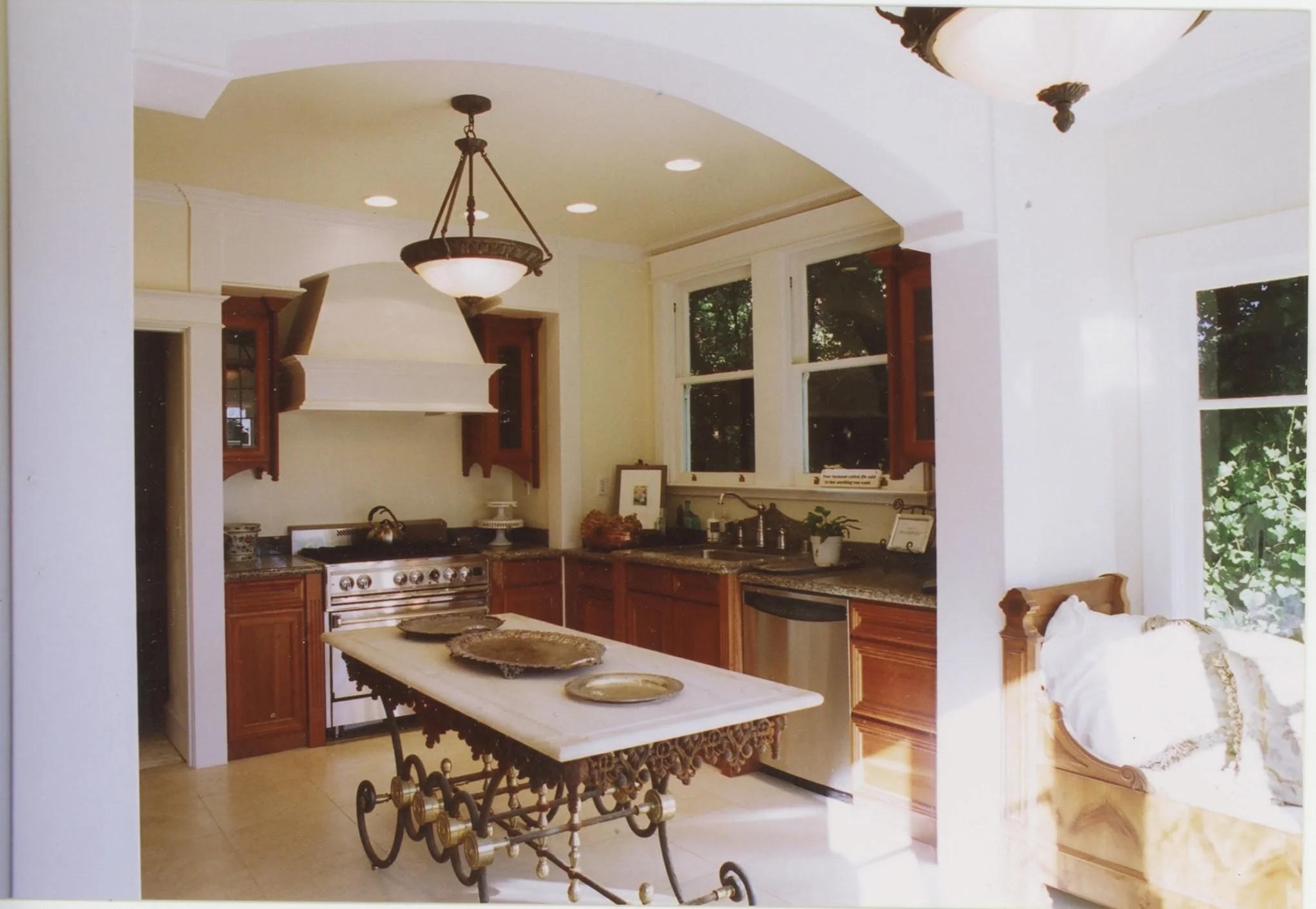
Kitchen
Case Study Five:
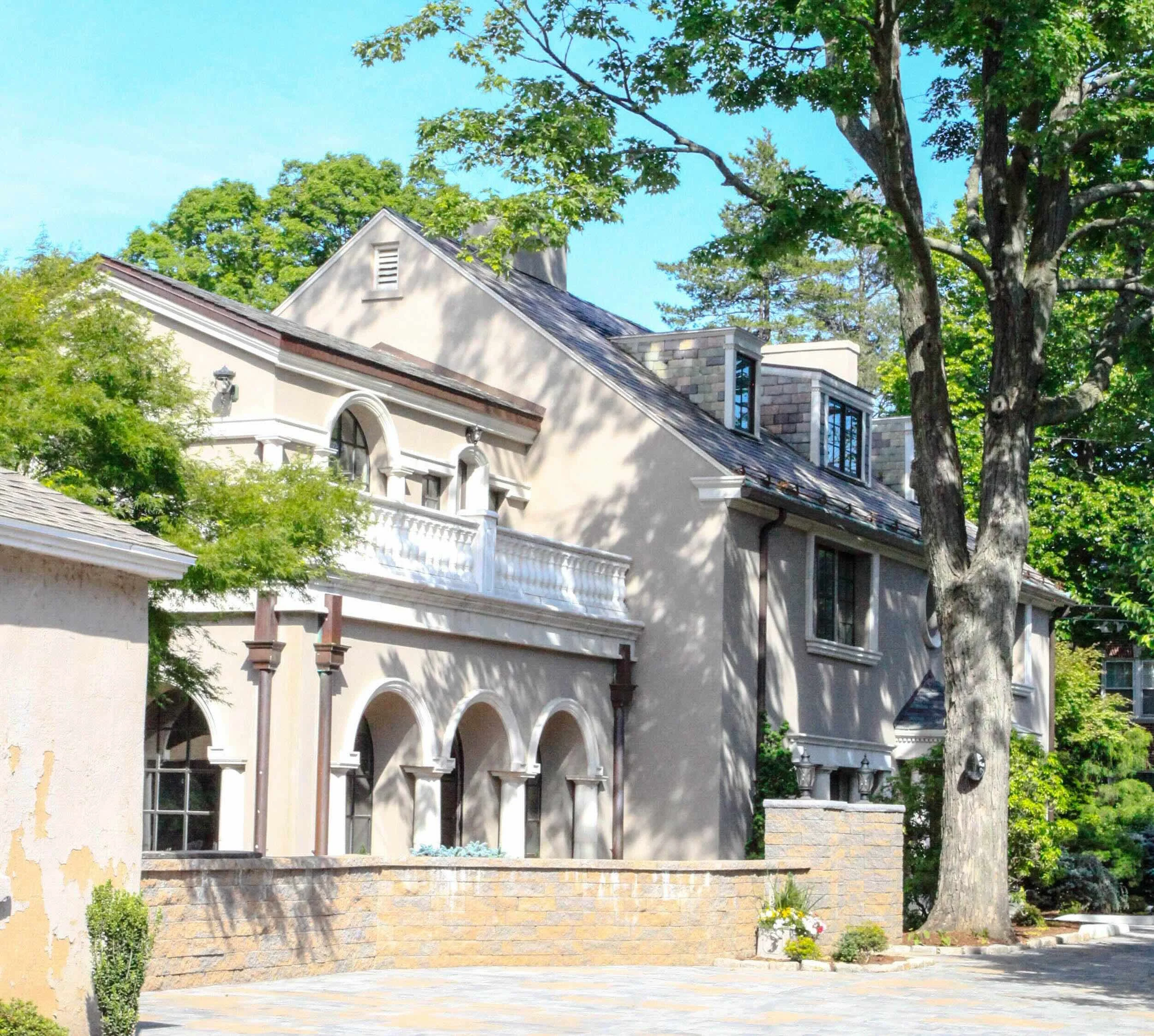
Yale House, New Haven, CT.

Building Front
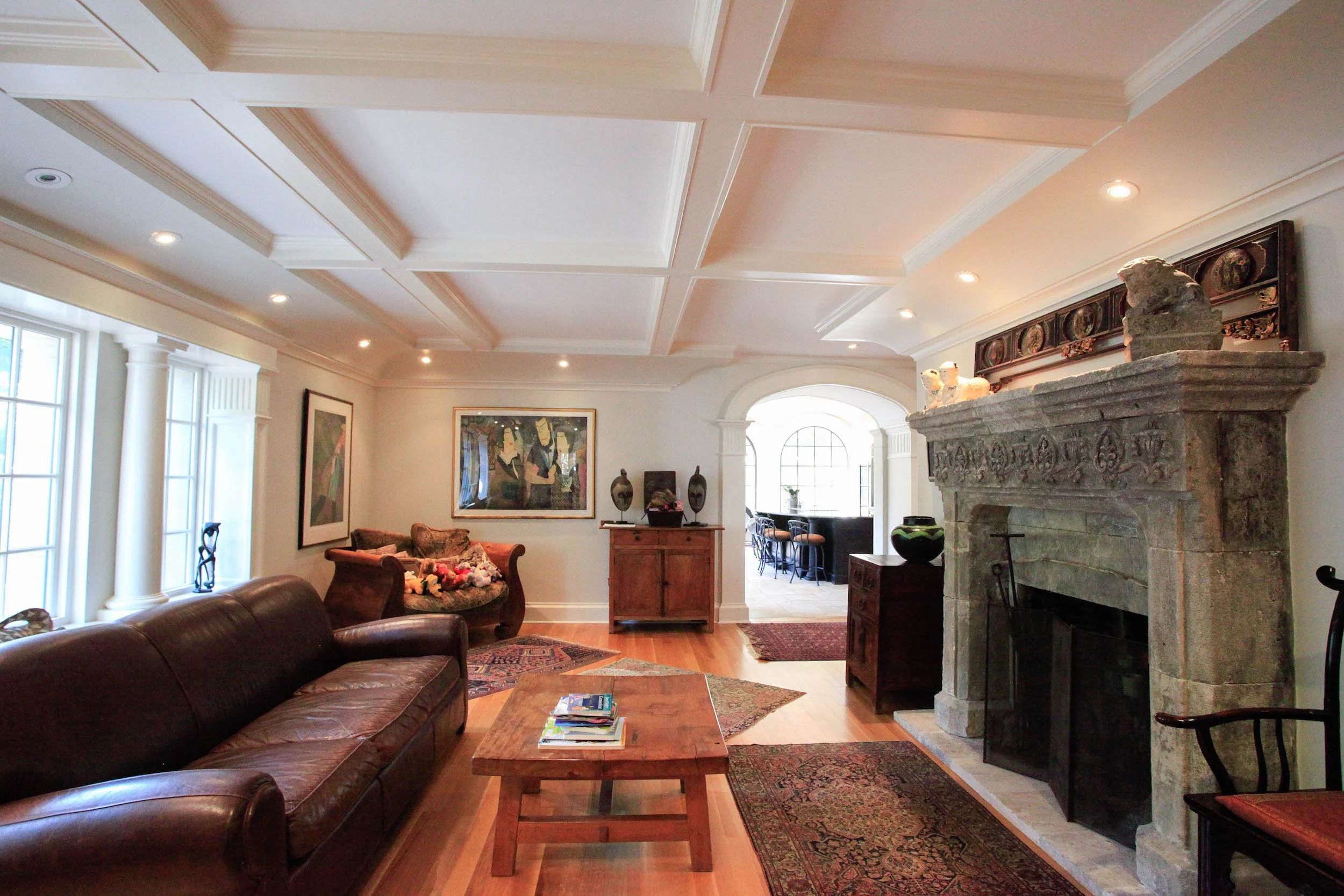
We were asked to design a total “gut Interior and exterior remodel” plus a Conservatory Addition for this former Yale President’s home on the edge of the Yale Campus. Now owned by a Yale medical school professor and a physician/Clinic Director, this “would-be” Colonial-Georgian home seemed to want to be much more of a character to match that of its owners.
Living Room
The Clients wanted something that only an Addition could provide: their list of wants included a Family Room/Kitchen/Conservatory, a new Master Bath with an Egyptian Alabaster tub and a Terrace for sun and air. Our design provided all of that, clothed in the New England Georgian style fitting to its neighborhood.
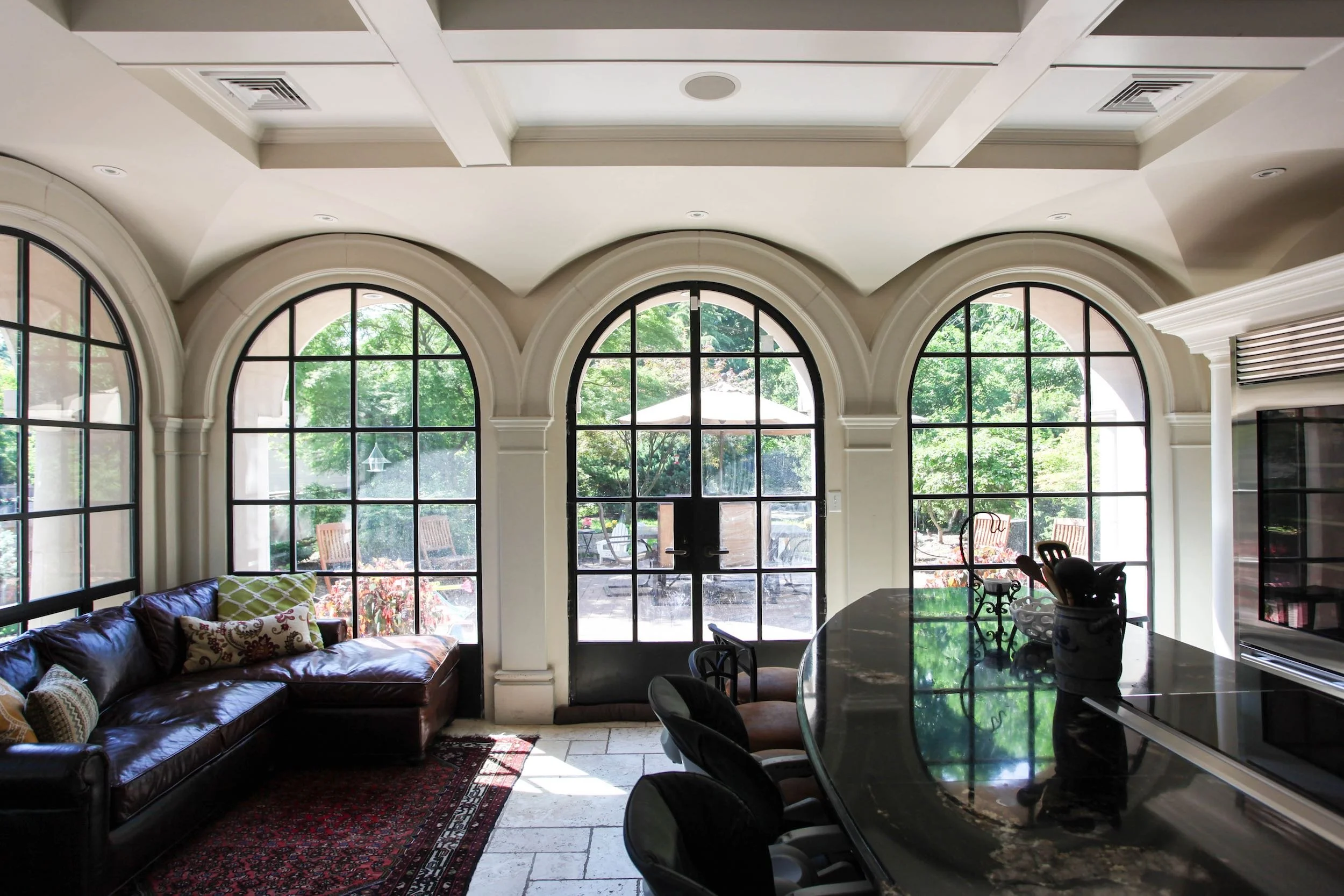
Conservatory/Kitchen
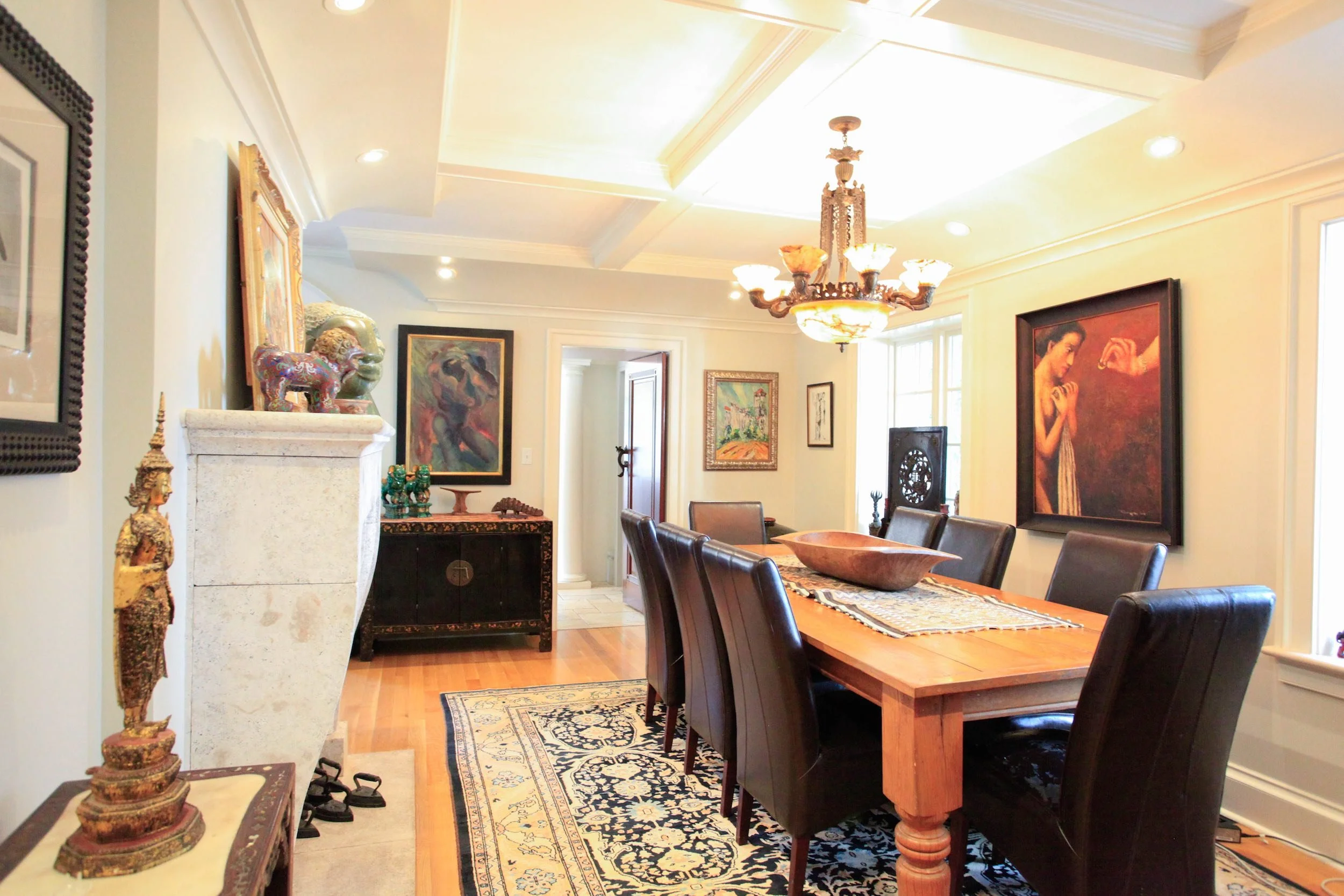
DINING ROOM
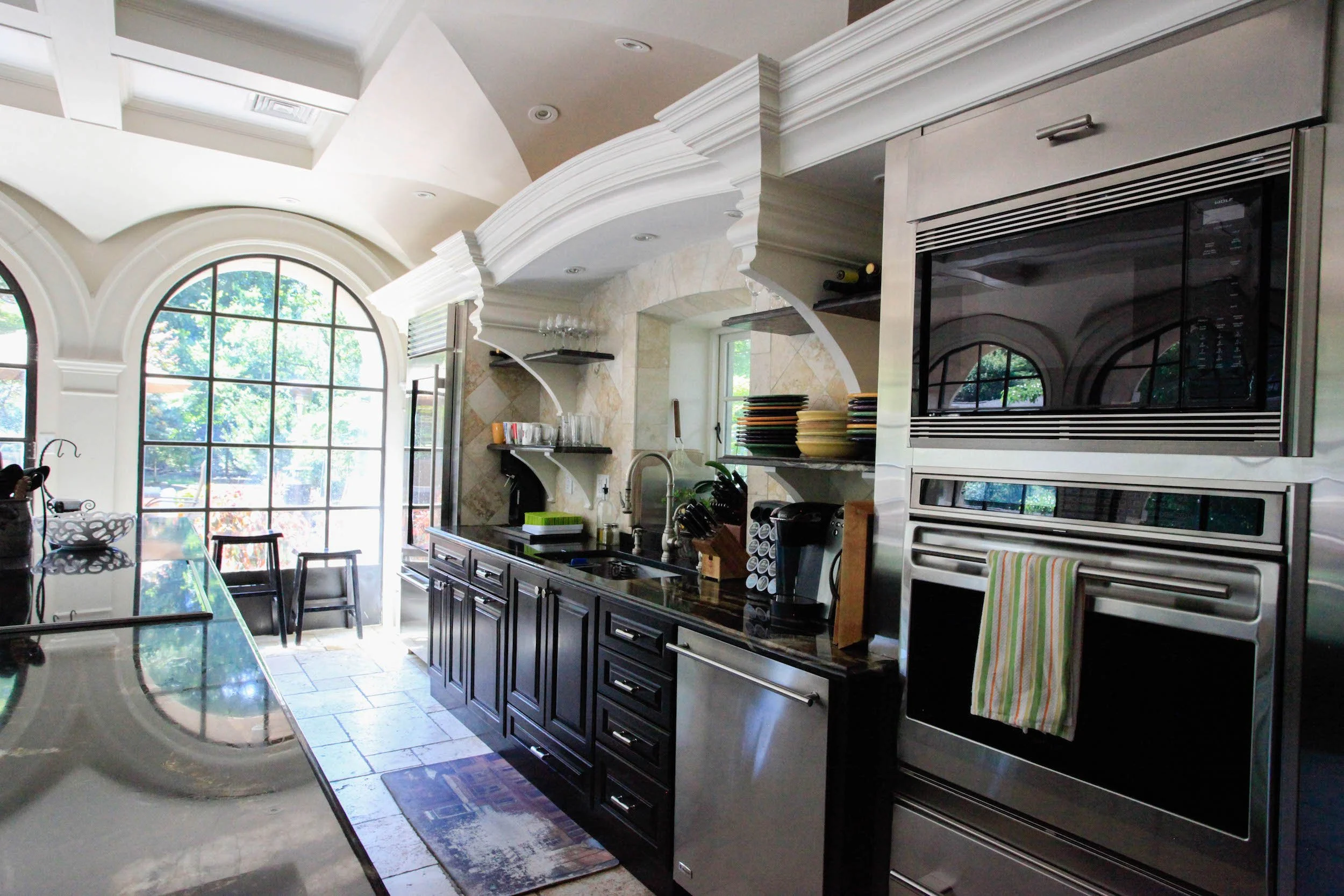
KITCHEN

Living Room
five years later the couple, now with two children, headed to the suburbs and, reluctantly sold their home for nearly twice their total investment in the property.
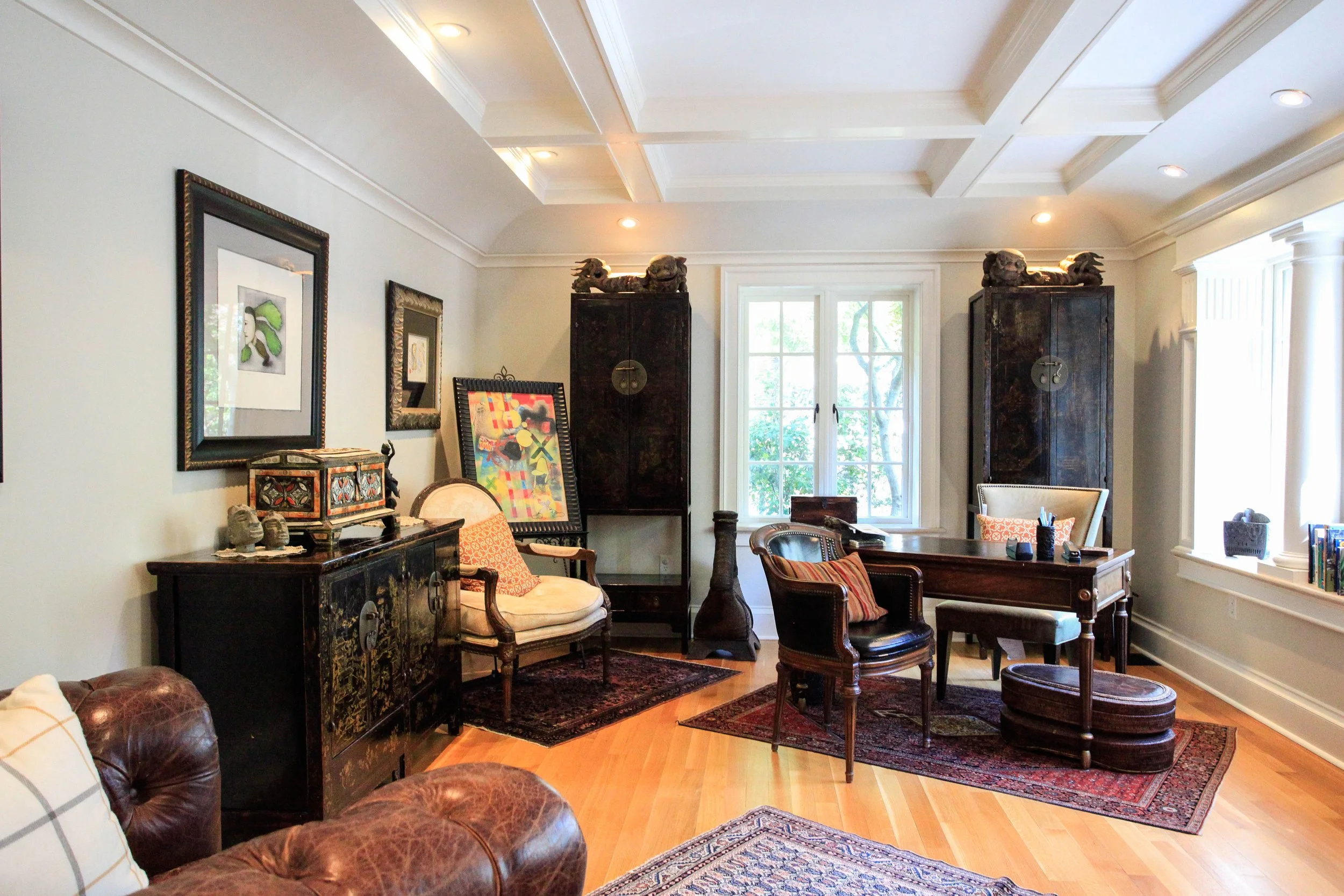
OFFICE
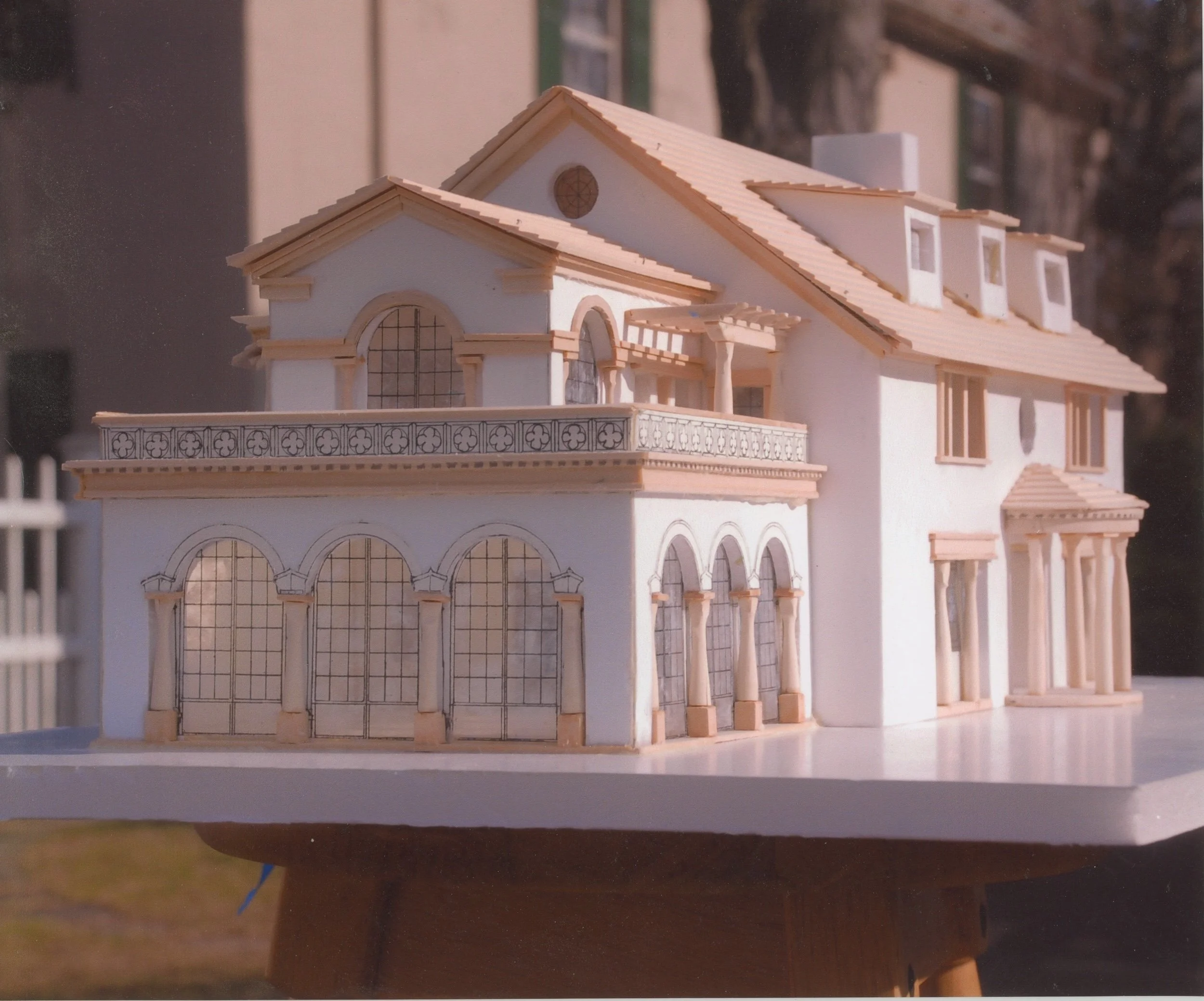
Model of New Conservatory
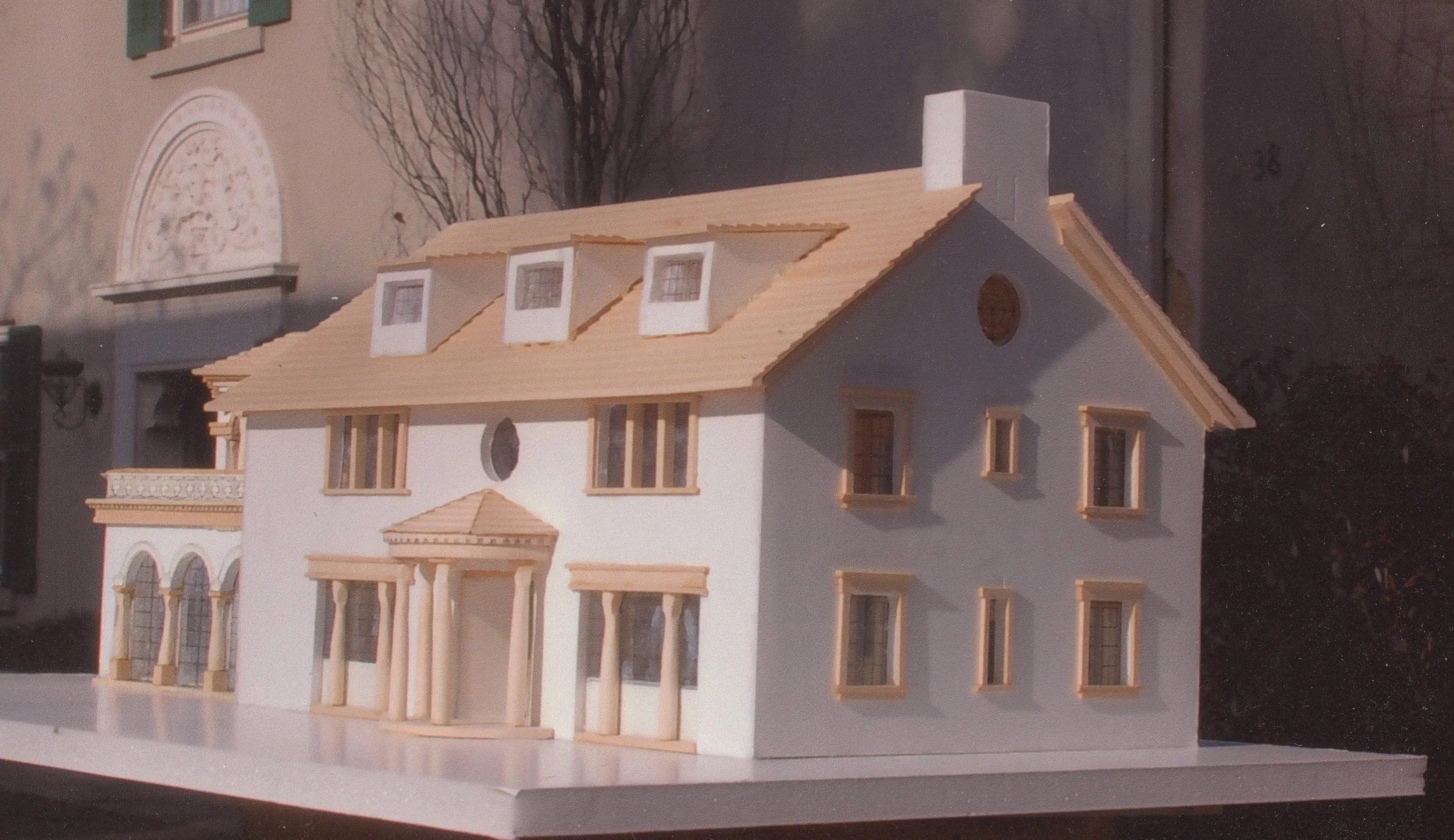
Model of new Building Front
About Us:
Mark Wallace Little
Architect, Principal

Education:
Stanford University,
Bachelor of Arts with Distinction
Elizabeth R. Crossett Scholarship
University of Minnesota Architecture School
Bachelor of Architecture (5 year) with Distinction
Yale University, School of Management
M.B.A.
Experience:
Licensed as Architect (C-9290) in California in March 1977. Licensed as Architect in Connecticut in 2016.
See Archives on this site for list of 51 Projects to date.

Lorna Beth Hall
Interior Designer &
Physician Assistant
Experience:
Although Lorna’s “day job” has been her work as a Physician Assistant, her true passion has always been her work as an Interior Designer working on home design projects. She has Designed the Interior Finishes and most Furnishings of 24 of our Projects to date.
Education:
University of California, Santa Cruz
B.A. with Distinction
University of California, Davis Graduate Physician Assistant Certificate
Contact:
markstudioarchitecture.com
Primary Phone: 415-713-9480 email: capomaestro2@gmail.com
106 Vicente Road, Berkeley, CA. 94705
Design:
Mark/Studio Architecture specializes in custom-designed homes and home remodel projects, mostly nearby in Marin County and in the East Bay neighborhoods of the San Francisco Bay Area. Approximately half of our 51 projects to date are single family homes, and, in recent years, that has been our primary work product. We prefer the personal interaction of working with individuals and families, and we love designing homes. While our designs are typically eclectic, common design themes are modern, Italian Mediterranean, craftsman/shingle style, modern Farmhouse, colonial, Georgian, and mountain/ski-house.
What we do and how we do it
Part of what it takes to design a beautiful home is easy to explain. We gather a lot of information that will guide the design. We get to know the client. We become the observer; they, the observed. How do they live? How do they want to live? What is their current home like? Which parts of our culture are important to them? How do they socialize? What do they need to make their way in the world? What are their dreams? And, of course, how much can they spend to make it happen? We get to know them. They come to trust us.
Then we get to know their site, the lay of the land, the wind in the trees, the sunlight, the shade, the vistas and the quiet privacy. But the site will also have limitations; we look for what to avoid. This is a slow quiet time of observation. We study this for hours, imagining the effect of changing light in rooms at different times of day and year. Then we take this back to the client and tell them what we saw and how that will guide us.
But actually putting all of this together into a good design is harder to explain. We must develop the interior and the exterior somewhat simultaneously, alternately prioritizing one over the other, then reversing that process. So, the first steps are the creation of one or more ideal floor plans and one or more ideal site plans. Then, we try to fit them to each other. From this point on, it rapidly gets much more complex, and, as the pieces of the puzzle start to mesh, we start to visualize a form vocabulary and a structural expression which, in turn, leads to ideas about style, lighting, material, and the artistic expression of composition, focus, counterpoint and balance, all in the context of the natural and human-built environment of the site.
There are other factors to consider, such as neighborhood context, locally available materials and labor, and local culture and permitting requirements. But mostly, it is about the client and the site.
Form is visualized for both the exterior and the interior, where it is space that is formed. Gradually, all of these elements are made to converge, like dancers coming together. But the dance can’t be rushed. It takes time, patience and a lot of tracing paper. But when the dancers do come together, it is most exhilarating for the architect. What we live for!
At several stages in the design process, we will meet with the client to discuss the “fit” of the emerging design to their needs, physical and emotional. Sometimes that leads to design changes. But, if we have listened and observed carefully, the optimal design is at least close to being realized.
Documents and Permit Approvals:
The second major stage of our work is the creation of documents that inform the local permitting authorities and the prospective contractor of the exact characteristics of the new structure. The documents usually include many architectural and engineering drawings, written specifications about products and methods for each trade, and finally, structural and energy loss calculations. The drawings and calculations are submitted to the building and planning departments for review. In many Bay Area communities, some home projects must also pass through a rigorous process called, “Design Review”. Guiding a project successfully through design review requires of the architect a knowledge of the community’s planning standards and goals and an ability to blend conformance to the guidelines into the design. We consistently demonstrate an ability to work well with planners, concerned neighbors and others to resolve any issues.
Construction Phase:
We usually have a good experience working with contractors, an outcome probably resulting from our many years of experience as an architect/builder. Many architects are able to communicate in drawings their end product design, but they are thoroughly unequipped to understand how buildings are actually built. This problem has long been, and continues to be, a plague on the profession.
Even in the briefest of conversations, contractors readily grasp that we have a granular level understanding of their work, and this shared knowledge creates a bond that eases the entire process and helps assure that the building will be completed as intended in the design.
Architectural and Interior Design Services:
Consultation for: Preliminary Programming (P.P.) and Budgeting:
Meetings to discuss clients needs and aspirations for spaces, both interior and on the site;
Discussions about the architectural character of the proposed project. Discuss photos of similar projects.
Ascertain the clients budget and discuss the expected costs of construction.
Fee: hourly at $200./hour
Schematic (preliminary) design (S.D.):
Meetings to Confirm in writing, or modify and confirm, the programming and budgeting and to discuss “bubble diagram” concept drawings of the site and proposed home.
Architect to Develop and present concept Drawings of site and floor plans and exterior elevations to establish basic scope, layout and appearance of the project.
Plans include size, function and relationships of the spaces, determination of building systems, including
structure concept and proposed mechanical, electrical and plumbing systems.
Compliance to building and planning codes verified. (Note: Compliance with discretionary design review can not be verified until after review.)
A general assessment of the design in terms of cost per square foot may be made at this point. Change of budget or design alterations may be warranted.
If needed, client shall hire, at architect’s recommendation, consultants, such as a structural engineer, a geotechnical engineer and a Title 24 energy and CalGreen certifier.
Fee: hourly at $200./hour (principal) & $150/hour (drafter). total Fee for P.P. + S.D. is capped at 15% of fixed fee.
Design Development (D.D.):
The schematic plans are reviewed and refined to then make detailed drawings, integrating structural, electrical, plumbing, fire-protection and mechanical engineering concept systems. D.D. drawings include site plan, floor plans, exterior elevations, building sections and sometimes, a few details.
The client-hired engineers, if any, would also provide D.D. drawings at this time.
Outline specifications for materials, finishes, doors, windows, appliances, cabinetry and systems are prepared.
Architect prepares a rough cost estimate based on the detailed design and material and finish selections.
Architect and client review and discuss the project’s feasibility to ensure alignment with the budget and
the program. Changes to budget and/or project scope may be required at this point.
Fee: Hourly at $200./hour (Principal) & $150/hour (drafter).Total fee for D.D. capped at 20% of agreed upon fixed fee.
Construction Documents (C.D.):
the architect creates and presents to the client a complete set of drawings and specifications sufficient for
construction, bidding and permitting. (note: the documents at this stage can not yet be considered to be compliant with some local planning department’s discretionary design review process, which usually requires a separate submittal and permit)
Detailed drawings include site plan, floor plans, building sections and elevations.
Specifications, sufficient for bidding and construction, detail materials, finishes, fixtures and equipment.
Schedules list doors, windows, finishes and certain specific code requirements.
Completed Drawings and specifications by any consultants, such as engineers and certifiers are provided.
Fee: Hourly at $200/hour/Principal & $150./hour (drafter).Total fee for C.D. capped at 45% of agreed upon fixed Fee
Contract Negotiation and/or Bids (C.N./B.):
The architect will either negotiate on behalf of the client with contractor(s) or make the contract(s) available to bidders and arrange for signed contracts.
Fee: hourly at $200./hour. Total fee for C.N./B. capped at 5% of agreed upon fixed fee.
Construction Administration (C.A.):
Architect will make regular site visits to inspect progress and work for c compliance with design and quality standards.
Manage contractor questions, clarifications, change orders, product and fabrication submittals and progress payments approvals.
Budget oversight: May help assess budget impacts of on-site changes and suggest cost-effective solutions.
Assist with contractor to contractor conflict resolution and liason with all consultants & contractors.
Project close-out Procedures and post-occupancy evaluation.
Fee: Hourly at $200/hour(Principal & $150/hour(Associate).Total fee for C.A. capped at 15% of agreed upon fixed fee.
Interior Design:
Fee: All phases hourly at $175./hour.
Schematic (Preliminary) Design: predesign/discovery phase & concept development.
Measure spaces, define scope of work,, color palettes, flow & function of spaces.
Design Development: Refine concept into drawings, schedules & pricing.
Construction Documents: Interior finishes and furnishings layout drawings & orders.
Floor Plans & Interior elevations, material, finish and furniture recommendations. Assist developing budget. Negotiate with contractors.
Construction Administration (if needed): finishes supervision & furnishings placement
List of Homes designed by Mark Little:
1. Wing House, Quail Lodge Estates, Carmel Valley, CA. 1976
2. Homes in Bel Marin Keyes, Novato for Ward Ryder Development, 1976
3. Apache Ranch Home, Placerville, CA. 1977
4. Four Concepts Design, Woodside and Napa, CA., 1977
5. 1974 Grandview Drive, Berkeley, CA. 1979 (destroyed in Oakland Hills Firestorm
6. 1086 Grandview Drive, Berkeley, CA. 1979 (destroyed in Oakland Hills Firestorm.
7. 106 Vicente Road, Berkeley, CA. 1983 (Original home destroyed in Oakland Hills firestorm
8. William (Bill) Pratt Home, Lafayette, CA. 1986.
9. Goldhammer Beach House, Pacifica, 1986.
10. 106 Vicente Road, Berkeley, CA. 1992 (new home built after the firestorm on same site as #7 #7 above.
11. 124 21st Ave., San Francisco, CA. 1995
12. 40 Eucalyptus Ave., Berkeley, CA. 1994
13. 30 Wellington, Ross, CA. 1994
14. 166 San Carlos Ave., Sausalito, CA. 1999
15. 166 Helen’s Lane, Mill Valley, CA. 2005
16. 10 San Rafael Ave., Belvedere, CA. 2011
17. 1440 Westview Drive, Berkeley, CA. 2014
18. 38 Lincoln St., New Haven, Ct. 2016
19. 197 Hillside Ave., Phase 1, San Rafael, CA. 2020
20. 1047 Bella Vista Ave., Oakland, CA., Phase 1, 2021
21. 11310 Thelin Drive, Truckee, CA. 2022
22. 197 Hillside Ave., San Rafael, CA., Phase 2, 2024
23. 1047 Bella Vista Ave., Oakland CA., Phase 2, 2024
24. 106 Vicente Road, Berkeley, CA., Phase 2, 2025
Archive:
List of Homes designed by Mark Little.
List of Other Architectural projects by Mark Little.
A few drawings of current projects.
List of Commercial Projects designed by Mark Little
Four Restaurants for Host International, North Terminal, S.F.O., San Francisco, 1977
Commercial Kitchen Building for Host International, S.F.O., San Francisco, 1977
Avis Rent a Car Office Building, Auto Repair Building, Body Shop Building, S.F.O., San Francisco, 1977
MGM Grand Hotel and Casino, Lobby and Shops interiors, Reno, Nevada, 1978
5. Bank of America, Berkeley Branch, Berkeley, CA. 1979
6. Bank of America, Willow Glen Branch, San Jose, CA., 1979
7. Bank Of America, Foster City Branch, Foster City, CA. 1979
8. Holiday Inn Civic Center, Lobby Interiors, seismic restructuring, Entry Facade, San Francisco, 1988
9. Alaska Airlines Jetliner Hangar, Retrofit, Oakland Airport, 1988
10. Terminal One, Food Court, Oakland Airport, 1988
11. Terminal One, New Baggage Building, Oakland Airport, 1988
List of Preservation/Restoration Projects Designed, all or in-part, by Mark Little:
1. Boronda Adobe State Historical Site, Salinas, CA. 1975 (Pro Bono) Period 1650
2. Smith Farm Farmhouse and Barn, Berkeley, CA. 1993 Period approximately 1880’s
3. Oakland City Hall rebuild after Loma Prieta Earthquake, Oakland, 1989, per. 1910
4. 121 24th St., San Francisco Period 1906 (see list of houses)
5. 40 Eucalyptus Ave. Berkeley, CA. 1994, Period 1906 (see list of houses)
6. 166 San Carlos Ave., Sausalito, 1999, Period 1885 (See List of Houses)
7. 166 Helens Lane, Mill Valley, CA. 2007, Period 1925 (See List of Houses)
8. 30 Wellington, Ross, CA. 1996, Period 1911 (see list of houses)
5. 10 San Rafael Ave., Belvedere, CA. 2012, Period 1885 (see list of houses)
6. 38 Lincoln St., New Haven, CT., 2016, Period 1920 (see list of houses)
7. 1047 Bella Vista Ave., Oakland, CA. 2021, Period 1890 (see list of houses)
List of Institutional and Educational Projects designed in whole, or in-part, by Mark Little:
1. Kaiser Permanente Radiology Laboratory, Oakland, CA. 1976
2. New Intermediate School, Site Plan and Elevations, Walnut Creek, CA. 1987
3. Oakland City Hall, Post Earthquake Seismic repair and Interiors Rehab., Oakland, 1989
4. CalTrans Regional Office Building Competition, Oakland, CA., Wilstein Dev’mt, 1989
5. Suisun City Civic Center, Vestibule design, Suisun City, CA. 1990
6. Hass Business School, UC Berkeley, Berkeley, CA. construction documents, 1991
List of Office Interiors Projects designed, all or in-part, by Mark Little
1. Law Offices: Thelin, Marin, Johnson and Bridges, Embarcadero Ctr, S.F.CA., 1978
2. Law Offices of Lillick, McHose and Charles, Embarcadero Ctr, SF. CA. 1978
3. Norwegian Cruise Ship Offices, San Francisco, CA. 1978
4. Bank of America Premises Offices, San Francisco, CA. 1979
5. Hambrick & Quist Investment Bank Headquarters Competition, SF.CA.1987
6. Kohlberg, Kravis and Roberts, S.F. Offices, Lobby/security, 1988
7. Firemans Fund Offices, Novato, CA. 1989
Current Projects:
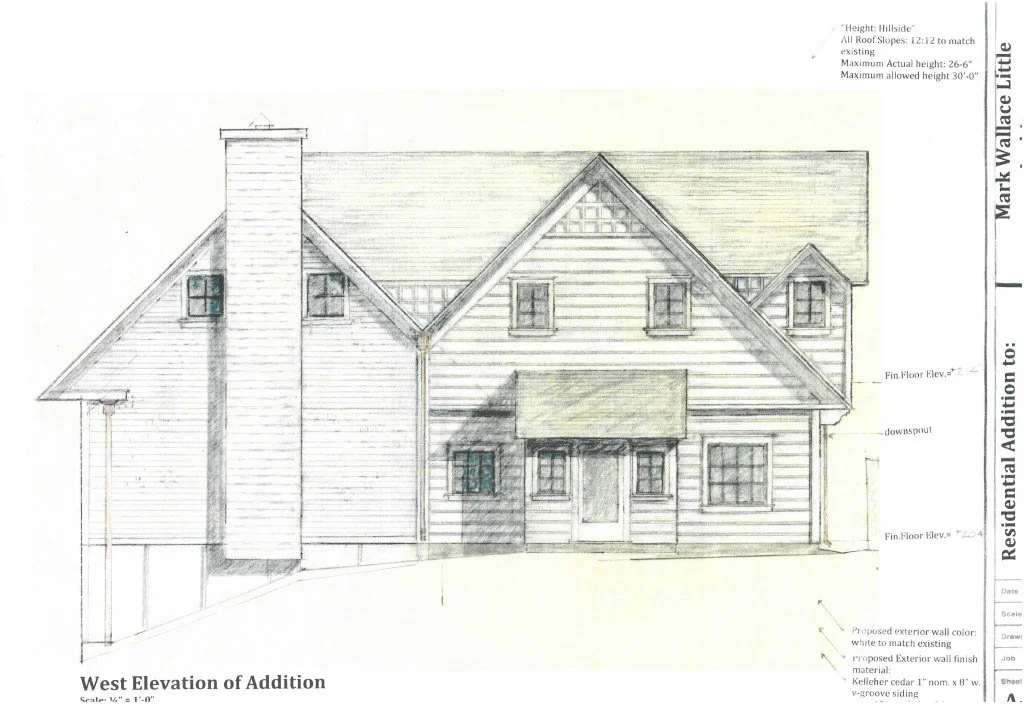
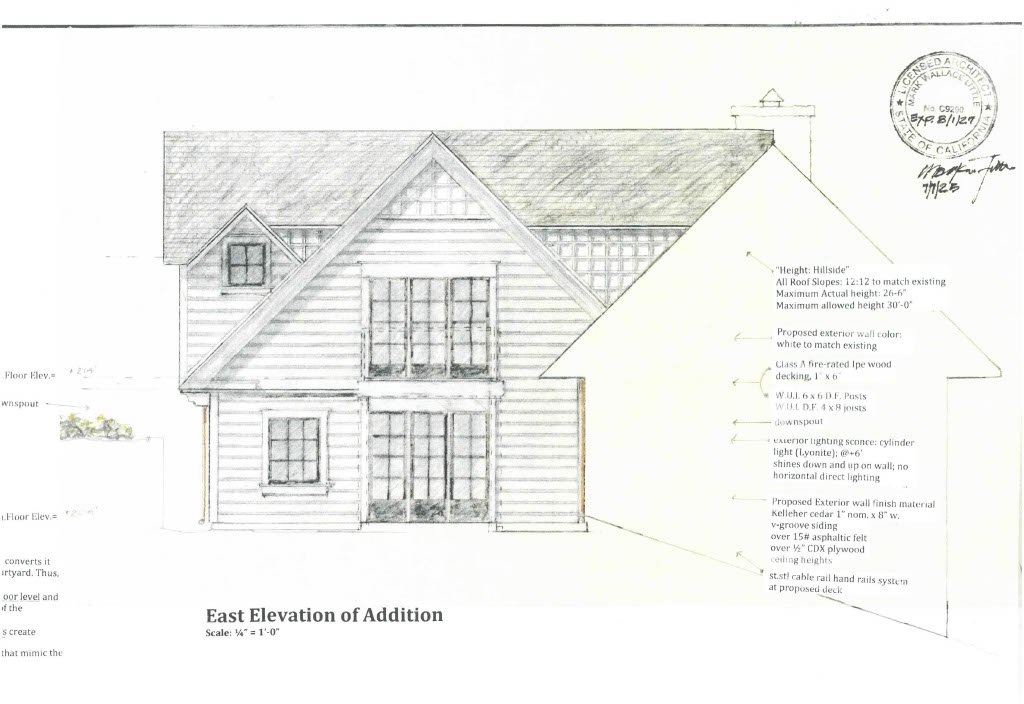
Hillside home in San Rafael, Phase 2-Addition
(Design Review Approved: 10/03/2025)
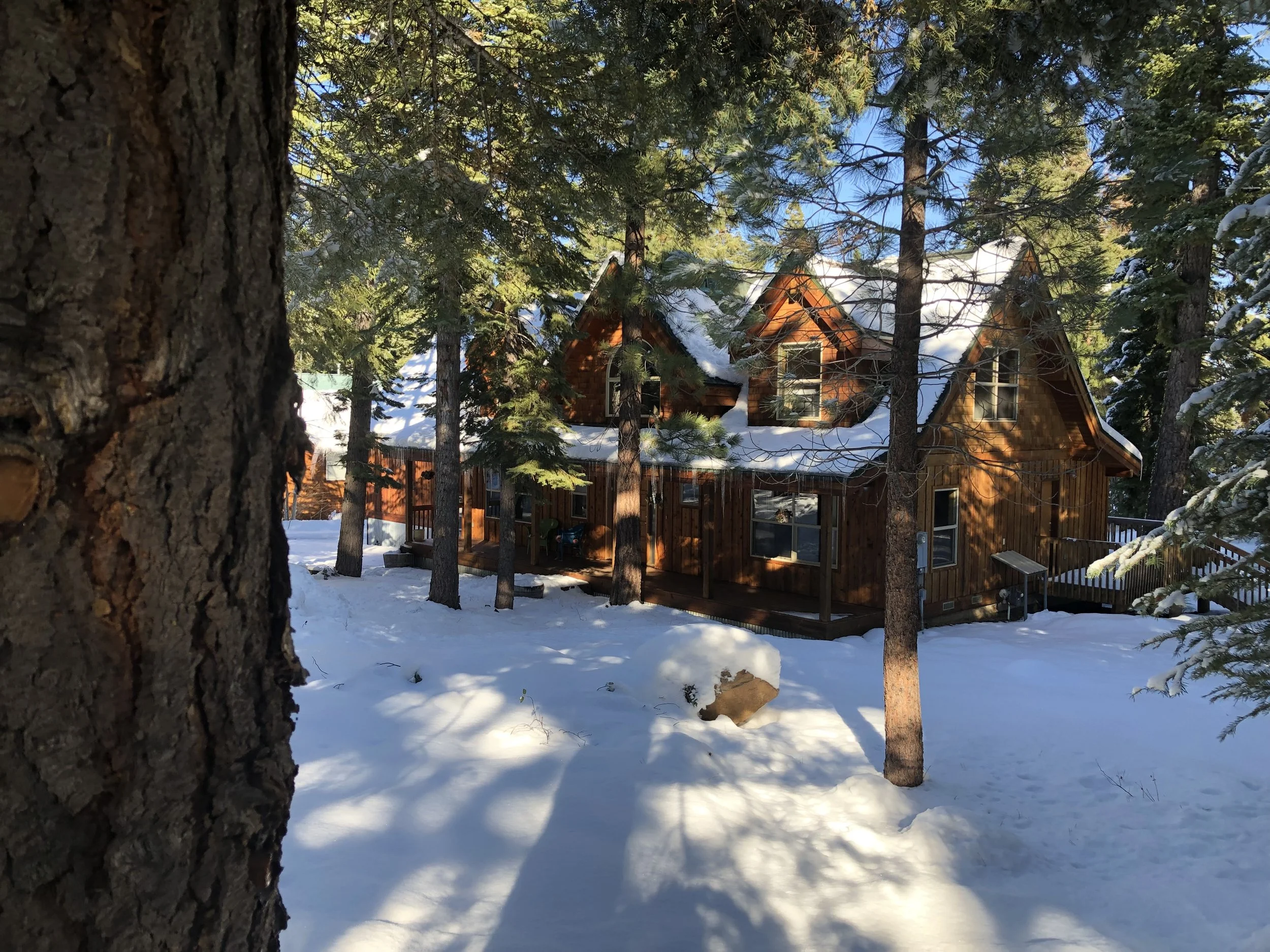
Mountain Home, “Snow House”, Truckee